Sources
Catalog
See it in action
Browse the models and styles behind stories like this one — free account, instant gallery.
Explore the catalogDiscuss this with
Pick a companion and get their take on this story

Elias unpacks the research behind the headlines in plain language.
Browse the models and styles behind stories like this one — free account, instant gallery.
Explore the catalogPick a companion and get their take on this story



Capcom has publicly committed to a future where AI collaborates with developers inside its proprietary RE Engine, outlining plans at the Capcom Open Conference RE: 2026 that signal a significant shift in how major studios think about generative tools in production pipelines.

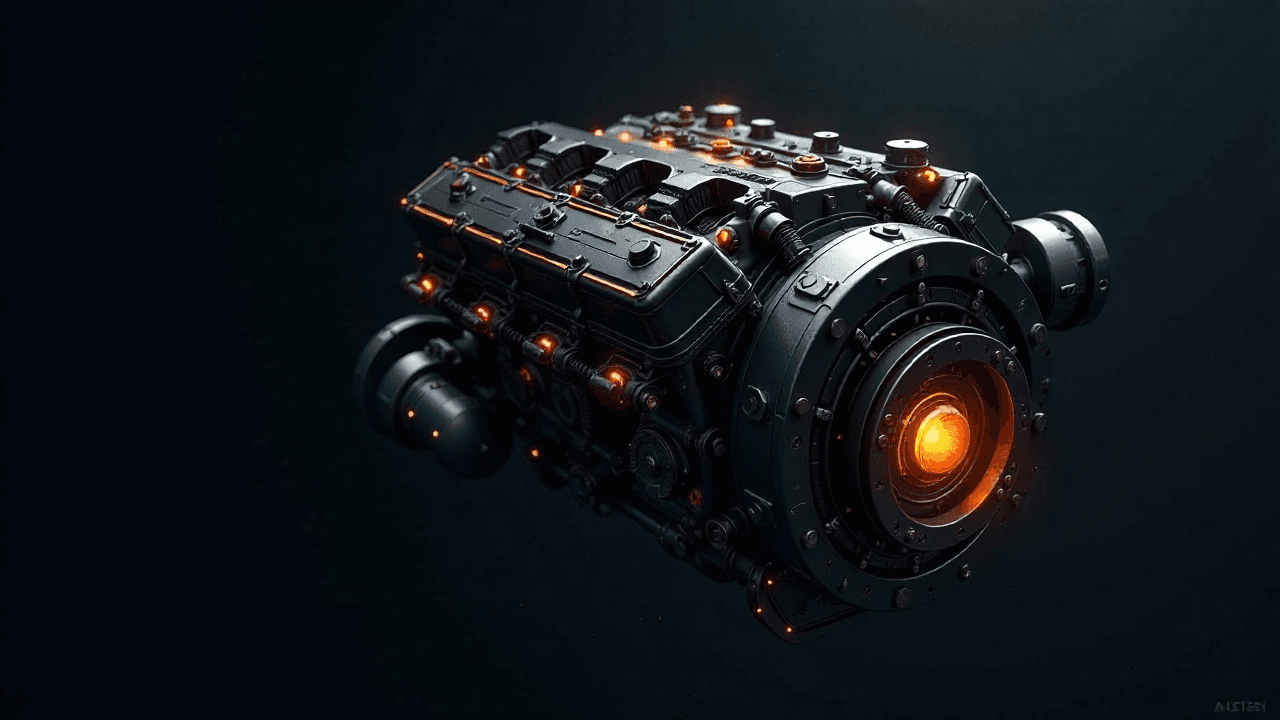
Capcom's RE Engine already powers titles like Resident Evil Requiem; the REX Project aims to layer AI generation directly into that same pipeline.
Image: The Verge / The Verge AI
The REX Project — short for RE Engine eXtension, based on the conference framing — is not a single AI feature but a roadmap for embedding generative and assistive AI across the RE Engine's toolchain. Ishida's presentation, according to The Verge, described the goal as building toward collaborative creation between human developers and AI systems, with the engine itself as the integration layer.
That distinction matters. Most studios experimenting with AI today use external tools — a separate image generator for concept art, a standalone code assistant for scripting — that sit outside the core engine. Capcom is describing something more tightly coupled: AI assistance that lives inside the same environment where assets are built, tested, and iterated. Think of it as the difference between using an AI image tool in a separate browser tab versus having generation and refinement controls built directly into your compositing software.
For anyone who generates AI images and then imports them into a production workflow, the friction point is always the handoff — the export, the format conversion, the re-import, the broken reference. Engine-native AI tools eliminate that gap. If Capcom's approach works as described, a developer could prompt for a texture variation, evaluate it in context inside a lit scene, and iterate without leaving the editor.
That workflow logic is directly relevant to AI-art creators working in game-adjacent pipelines — concept artists, environment designers, character modelers — who currently stitch together tools from different providers. The RE Engine is not publicly available, so creators won't access REX directly. But the architectural pattern Capcom is validating — generative AI embedded at the engine level rather than layered on top — is one that tools like Unreal Engine and Unity are also moving toward, and it will shape what third-party integrations look like over the next few years.
Capcom's willingness to name this publicly is also a signal about studio culture. The company's upcoming title Pragmata is literally a game about the dangers of AI, which makes Ishida's presentation a notable piece of internal candor: the studio is separating its narrative themes from its production philosophy.
Capcom has not disclosed which AI capabilities are already in use versus which are still on the roadmap. It hasn't named model providers, hasn't specified whether the AI tools handle 2D asset generation, 3D geometry, animation, code, or some combination, and hasn't given a timeline for when REX features would ship in a production context. The conference presentation appears to be a strategic outlook, not a product announcement.
That gap is worth holding onto. Major studios have a history of announcing AI ambitions well ahead of any working implementation. What's concrete here is the organizational commitment and the engine-level framing — not a shipping feature set.
Creators building skills in AI-assisted asset generation — whether through Charmloop's image generator or dedicated 3D pipelines — are developing fluency in exactly the kind of human-AI iteration loop that Capcom is describing. The tooling will keep changing; the underlying skill of directing AI generation toward a specific creative outcome is what transfers. Keeping an eye on the AI tools catalog for engine-adjacent integrations will matter more as this pattern spreads beyond Capcom.