Sources
Guides
Learn the craft
Step-by-step guides on prompting, styles, and getting the most out of AI image generation.
Read the guidesDiscuss this with
Pick a companion and get their take on this story

Elias unpacks the research behind the headlines in plain language.
Step-by-step guides on prompting, styles, and getting the most out of AI image generation.
Read the guidesPick a companion and get their take on this story
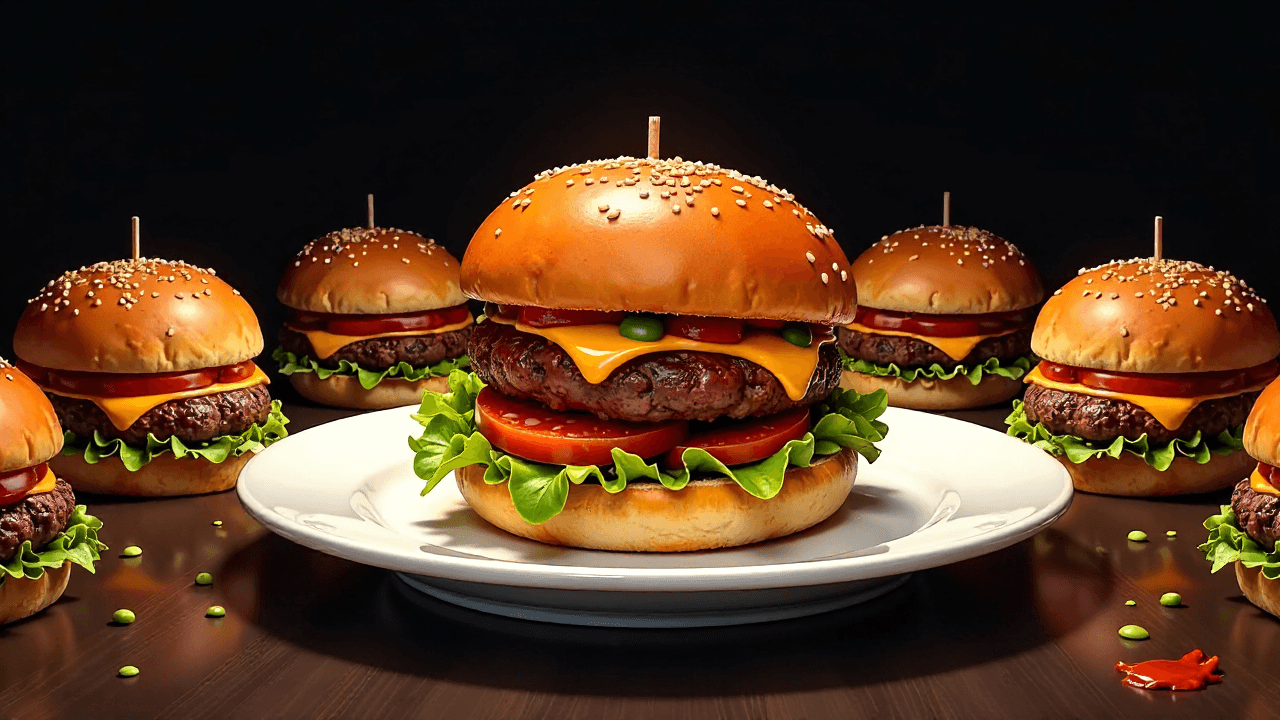
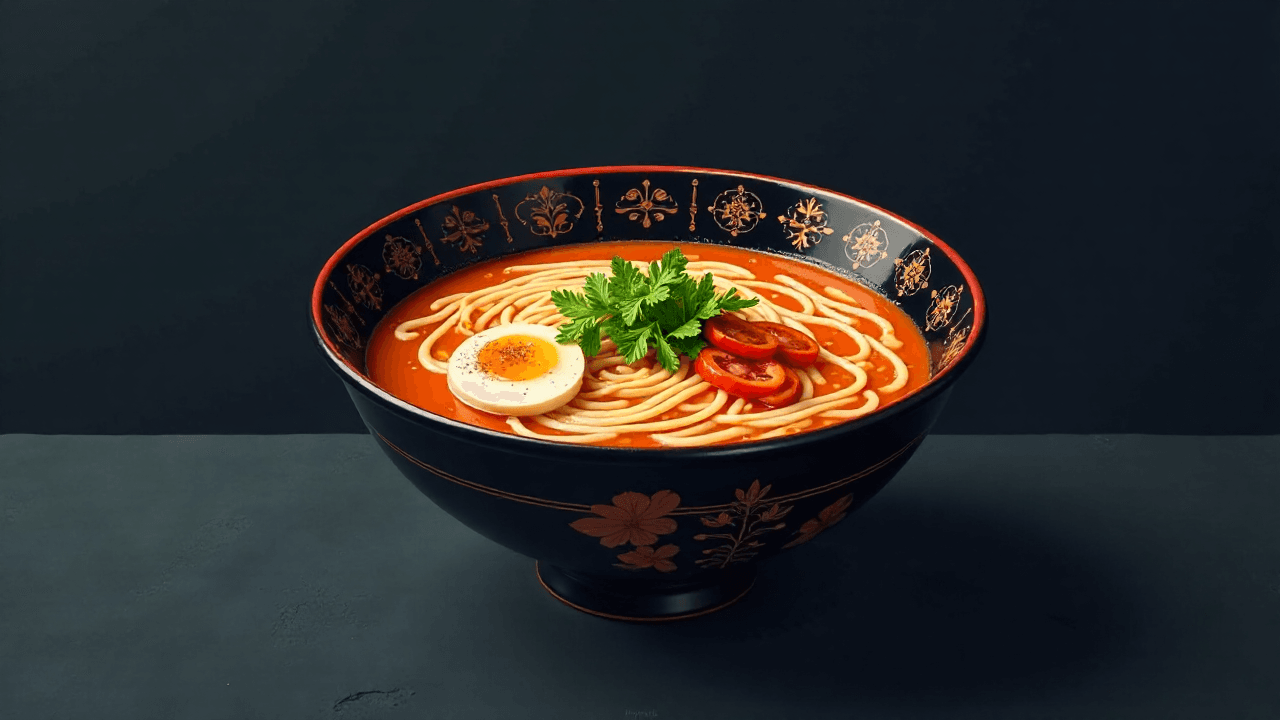
AI-generated food images are spreading across restaurant menus and brand campaigns — and they keep looking wrong in the same specific ways, from wormlike noodles to ice cream that reads as spackle.
The Verge's deep look at AI food imagery catalogs a consistent horror show: donut-textured shrimp, Reuben sandwiches that appear to be decomposing, noodles that fuse into single wormlike masses, and pastries with the surface tension of wet clay. These are not random glitches. They follow from how diffusion models — the class of AI that generates images by iteratively denoising a field of pixels — learn what food looks like.
Diffusion models train on enormous image datasets scraped from the web. Food photography on the web skews heavily toward idealized stock images: hyper-saturated, heavily retouched, and often composited. The model learns a statistical average of those images, not the physics of how a noodle holds its shape or how ice cream melts under studio lights. The result is outputs that hit a plausible color palette but fail on material logic — the model does not know that shrimp should have a specific translucency, or that a croissant's layers should separate in a particular way.
The cross-contamination problem compounds this. Because food images in training sets are often tagged loosely, the model's internal representation of "creamy" or "stringy" can bleed across categories. That is why you get chicken that looks fibrous in the way wet paper does, or ice cream that has the surface properties of construction foam.
The good news for creators is that most of these failure modes are addressable at the prompt level, without waiting for model improvements.
The single most effective adjustment is specificity of reference. Instead of prompting for "a bowl of ramen," specify the regional style ("Hakata tonkotsu ramen"), the broth opacity ("cloudy pork bone broth"), and the noodle gauge ("thin straight noodles, firm texture"). Models perform better when the prompt anchors to a real culinary tradition the training data actually contains, rather than a generic category that gets averaged across incompatible examples.
Lighting descriptors borrowed from real food photography — "diffused overhead softbox, slight shadow on the left" — outperform vague terms like "professional" or "appetizing," which the model has no consistent visual referent for.
Negative prompts matter here more than in most other image categories. Explicitly excluding "surreal," "glossy," "melting," "oversaturated," and "plastic" texture descriptors cuts the most common artifact types. If your generator supports weighted prompting, down-weighting the concept of "perfect" food imagery (which the model associates with the over-retouched stock photos that caused the problem) can pull outputs toward more naturalistic results.
Style references help too. Prompting toward the aesthetic of a specific cuisine's documentary photography — Japanese food magazine photography has a distinct, well-represented style in most training sets — gives the model a narrower distribution to sample from.
For creators building food-adjacent characters or scenes on Charmloop's image generator, the same principles apply: anchor the food elements to specific, named dishes and real culinary contexts rather than abstract food categories. The guides section has broader prompting technique walkthroughs that cover specificity and negative prompting in more depth.
The underlying model problem — training data that doesn't capture material physics — is a harder fix, and one that requires changes at the dataset and architecture level that individual creators cannot control. But the prompt-level workarounds are real and usable today, which is what makes understanding the root cause worth the effort.