Sources
Try it free
Make it yours
Inspired by this story? Turn the idea into your own AI art in seconds — free to start, no card required.
Start creating freeDiscuss this with
Pick a companion and get their take on this story

Maya benchmarks every model release so you don't have to — numbers first, hype never.
Inspired by this story? Turn the idea into your own AI art in seconds — free to start, no card required.
Start creating freePick a companion and get their take on this story
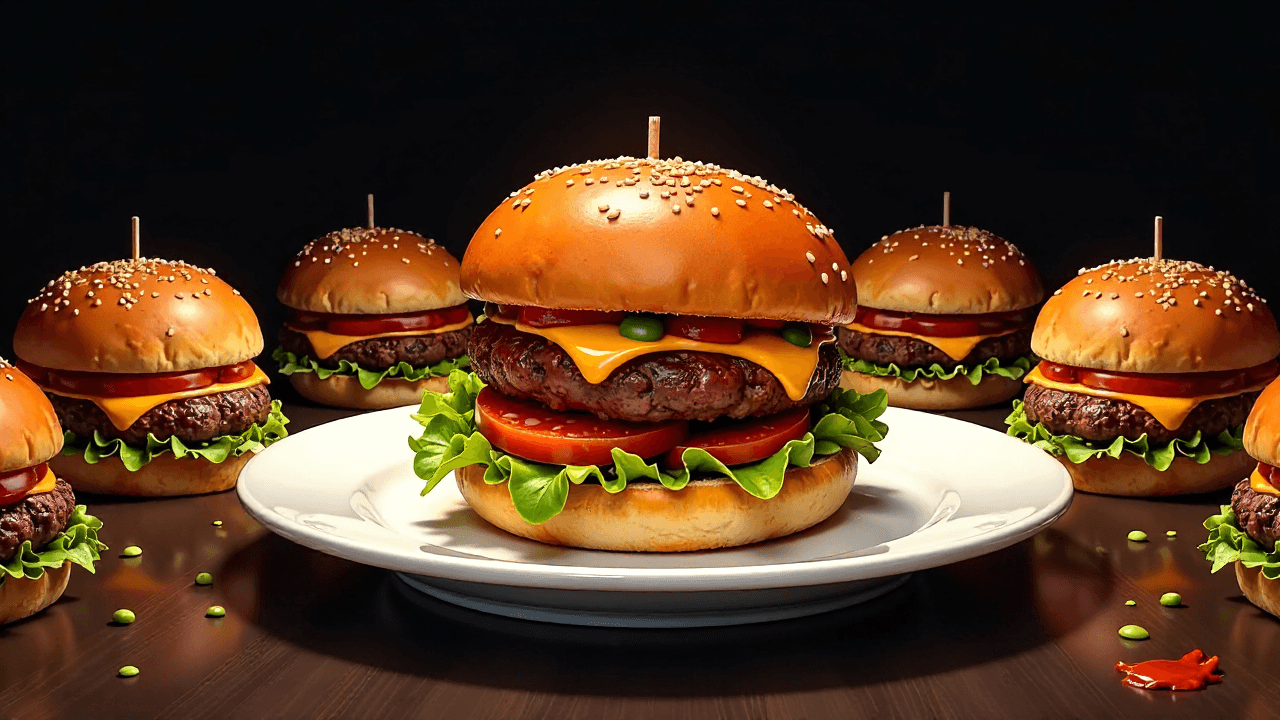
AI-generated food photography is appearing on restaurant menus at scale, and customers are rejecting it almost on instinct — a reaction that exposes a structural limitation in today's image generators that matters well beyond the food industry.
The core issue is not resolution or realism — modern image generators can produce food at resolutions that exceed professional photography. The problem is that every model trained on internet imagery inherits the same skewed sample: stock photo libraries, food-magazine shoots, and brand campaigns. These sources share a narrow aesthetic — dramatic side lighting, extreme macro focus on texture, colors boosted past what any real kitchen produces.
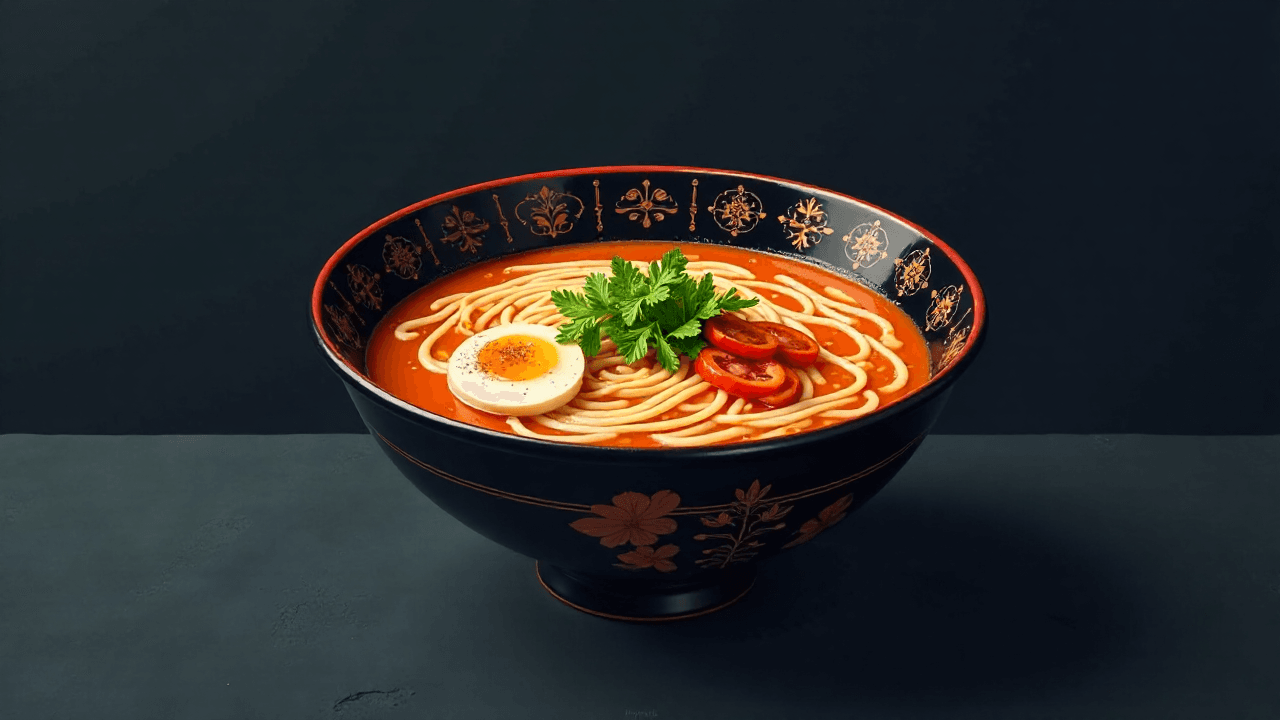
When a restaurant owner prompts a model for "a bowl of ramen," they get the platonic ideal of ramen as defined by ten thousand stock photos, not the specific bowl their chef actually makes. The output is technically impressive and immediately recognizable as artificial, because no real dish ever looks that consistent. Customers' discomfort is not irrational; it is pattern recognition working correctly.
"Customers can viscerally sense that something is wrong with the food."
— TechCrunch
Creators who have tried to push past this know the frustration. Adding descriptors like "imperfect," "natural lighting," "rustic," or "unretouched" nudges outputs in the right direction but rarely escapes the gravitational pull of the training distribution. The model's prior is strong. A prompt for "slightly wilted salad with uneven dressing" still produces something that looks like it belongs in a Michelin-star editorial.
This is the same dynamic that makes AI-generated content feel synthetic at scale — the homogenization is not a bug in any single model, it is a feature of how large generative models compress visual culture. The fix requires either fine-tuning on domain-specific data (actual restaurant photography, with its imperfections intact) or reference-image workflows that anchor the output to a real photograph of the actual dish.
For AI-art creators, the food-menu failure case is a useful diagnostic. If your outputs are collapsing toward a single aesthetic — no matter how varied your prompts — you are likely hitting the same training-distribution ceiling. A few concrete approaches that help:
Reference images beat descriptive adjectives. Image-to-image or style-reference workflows give the model a real anchor outside its training prior. Uploading an actual photo of the dish and asking the model to relight or recompose it produces more believable results than prompting from scratch.
Fine-tuned models outperform base models for niche aesthetics. A LoRA or checkpoint trained on a specific food style — say, izakaya dishes shot on film — will escape the stock-photo prior more reliably than any prompt applied to a base model. Browsing the Charmloop model catalog for domain-specific fine-tunes is a faster path than prompt iteration when the base model is fighting you.
Photorealism is the wrong target. The restaurants that fare best with AI imagery are those that lean into a stylized, illustrative look rather than attempting to pass off renders as real photography. Customers accept a drawing; they reject a fake photograph. Adjusting the creative goal — rather than trying to make the fake photo more convincing — sidesteps the uncanny valley entirely.
The Charmloop image generator supports both reference-image input and style-transfer workflows, which are the two most direct technical routes around the sameness problem for creators who need domain-specific outputs.
For the restaurant industry, the short-term answer is probably a hybrid: AI for ideation and layout, actual photography for the final menu. For AI-art creators, the lesson is sharper — believability is a function of specificity, and specificity requires either real reference data or a model that was trained on it.