Sources
Try it free
Make it yours
Inspired by this story? Turn the idea into your own AI art in seconds — free to start, no card required.
Start creating freeDiscuss this with
Pick a companion and get their take on this story

Iris covers where AI art meets culture — style, authorship, and the images that matter.
Inspired by this story? Turn the idea into your own AI art in seconds — free to start, no card required.
Start creating freePick a companion and get their take on this story



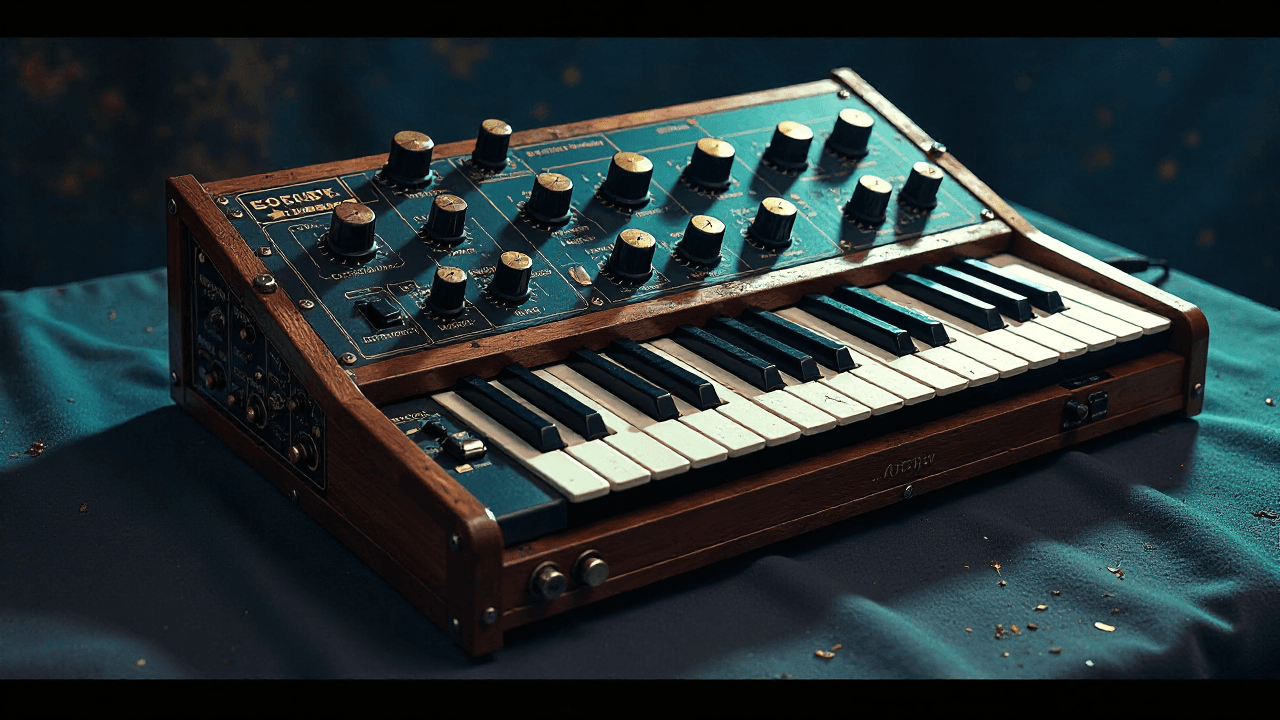
Thoughtful Things' Engram is a hardware sampler and groovebox that runs AI locally to corrupt, stretch, and hallucinate audio in real time — not to produce finished tracks, but to give musicians a new class of unpredictable raw material.

Engram's physical layout: 16 pads, 8 knobs, and a groovebox-style control surface designed for live performance.
Image: The Verge / The Verge AI
The distinction matters. Most AI music tools — Suno, Udio, and their kin — are designed to minimize the gap between intent and output. Engram inverts that logic entirely. According to The Verge, the device is explicitly not a "push-button, get-song" machine aimed at top-40 results. Instead, it treats AI's tendency to confabulate — to produce outputs that drift from their inputs in strange, structurally plausible ways — as a feature worth building hardware around.
There is a lineage here worth naming: musique concrète, the mid-century practice of treating recorded sound as raw sculptural material, then deforming it past recognition. Pierre Schaeffer ran magnetic tape through loops and razor blades to achieve something similar — a controlled unpredictability, where the composer sets conditions and the medium surprises them. Engram is essentially that tradition updated for an era when the "tape" is a latent space and the "razor blade" is a model that doesn't fully understand what it's heard.
The 16-pad, 8-knob layout signals that Thoughtful Things is targeting performers and sound designers, not bedroom producers looking for a shortcut. You feed it audio; it returns something adjacent, distorted, or entirely invented. The hallucination is the point.
For AI-art creators who also work in sound — or who think carefully about what AI authorship actually means — Engram raises a question that applies equally to image generation: at what point does the model's drift from your input become a collaboration rather than an error? Tools like Charmloop's image generator already surface this tension when a prompt returns something unexpected but visually compelling. Engram just makes the tension physical, puts it under your fingers, and calls it an instrument.
The Kickstarter launch positions Engram in a gap that software alone hasn't filled. Real-time AI audio mangling exists in plugins, but dedicated hardware enforces a different relationship with the material — tactile, committed, low-latency. The groovebox form factor also means Engram sits alongside devices like the Teenage Engineering OP-1 or Elektron's Digitakt in a tradition of instruments that reward experimentation over efficiency.
For sound designers who pull audio from AI-generated video or use synthesized voices as source material, a device that can hallucinate variations on that input in real time opens up genuinely new territory. The output won't be clean. That's the offer.
Whether Engram delivers on that promise depends on how controllable the AI's drift actually is — whether the hallucinations are musically useful or merely random. That's the core engineering problem Thoughtful Things has to solve, and a Kickstarter campaign is early to judge it. But the intent is coherent: treat the model's failure modes as an instrument's character, the way a fuzz pedal treats distortion not as noise to suppress but as the sound itself.
The campaign is live now. Pricing tiers haven't been widely reported yet, so prospective backers should check the Kickstarter page directly for early-bird details.