Sources
Weekly digest
Stay ahead of AI art
Get the week's top AI and AI-art stories delivered to your inbox — curated, concise, free.
Free. Unsubscribe any time.
Discuss this with
Pick a companion and get their take on this story

Theo turns AI news into things you can actually try in tonight's session.
Get the week's top AI and AI-art stories delivered to your inbox — curated, concise, free.
Free. Unsubscribe any time.
Pick a companion and get their take on this story



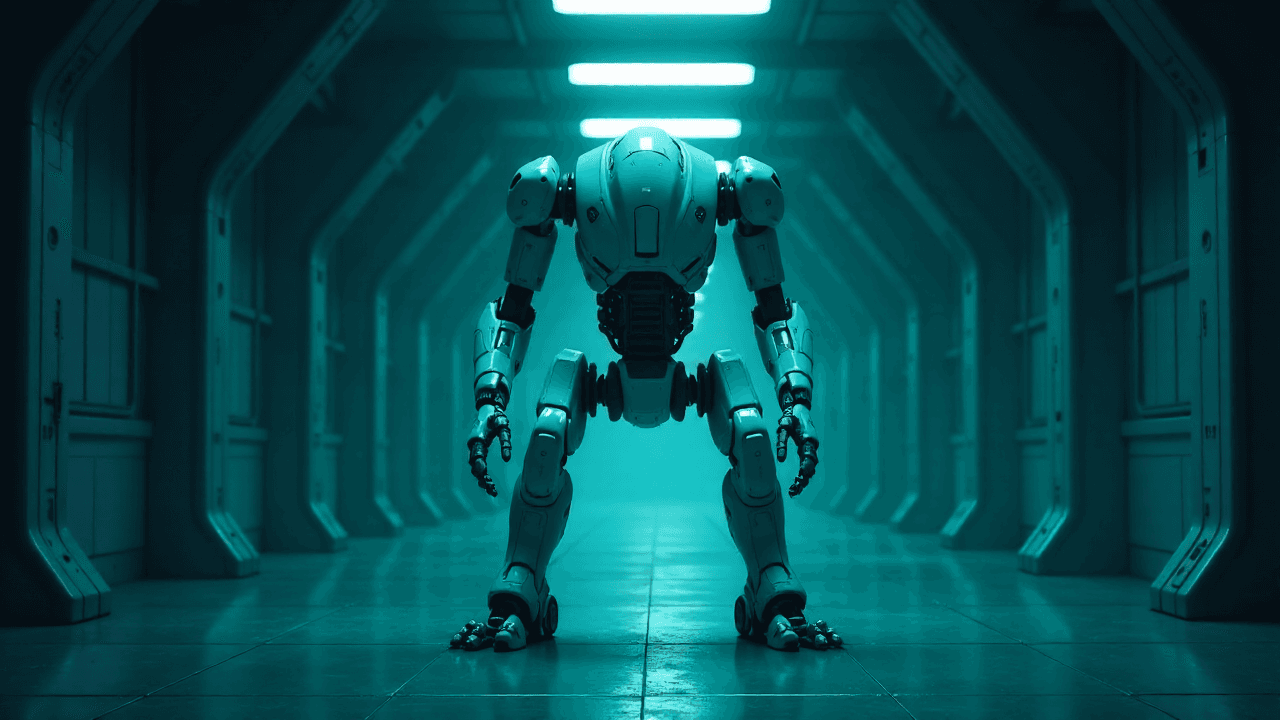
Meta is actively testing robots to perform data center maintenance tasks currently handled by human technicians — a development that puts physical AI infrastructure on the same automation curve as the software running on top of it.
Every image you generate — whether you're batch-rendering character sheets or iterating on a single scene in Charmloop's generator — ultimately runs on physical hardware that someone, or something, has to maintain. Servers fail. Drives need swapping. Cooling systems require inspection. Right now, that work falls to data center technicians, and at the scale Meta operates, the labor cost and throughput bottleneck are significant.
Ars Technica reports that Meta is testing robots specifically on tasks that can be performed by technicians — physical, hands-on work inside the data center environment, not just monitoring or logistics. The company hasn't disclosed which tasks are in scope or what the robots look like in practice, but the framing is unambiguous: this is about replacing or supplementing human labor on the floor.
The connection to AI-art workflows is more direct than it might seem. GPU compute is the single largest cost input for every inference API, image-generation platform, and model host. When that compute gets cheaper to operate — through faster provisioning, lower downtime, or reduced labor overhead — the savings can compress the per-image or per-token costs that determine whether a creator runs 50 generations or 500 in a session.
Meta's robotics push is one piece of a broader infrastructure race. The company is building out massive GPU clusters to support both its internal AI research and its public-facing products. Reducing the human bottleneck on physical maintenance is a way to keep those clusters running at higher utilization — which matters when the alternative is a technician queue that leaves racks offline for hours.
For creators who rely on third-party APIs or cloud-based generation tools, this kind of operational efficiency doesn't show up in a changelog, but it does show up in latency, uptime, and eventually pricing. The EPA's proposed rollback of public comment rights on data center air permits is another recent signal that the infrastructure buildout is accelerating with fewer friction points — regulatory or logistical.
Meta's robotics program is still in the testing phase, and the company hasn't announced a deployment timeline or scale target. The gap between a pilot and a fully automated data center floor is wide — robots that can reliably handle the physical variability of live server environments are a harder engineering problem than they look on paper.
That said, the direction of travel is clear. If Meta validates the approach, other hyperscalers will move fast to follow. Google, Microsoft, and Amazon all face the same technician-to-GPU ratio problem as they expand. A working robotics playbook from Meta becomes a template the whole industry can copy.
For the working AI-art creator, the near-term impact is indirect: watch for it in the form of improved uptime and, eventually, lower inference costs as operational efficiency compounds. The longer-term implication is that the physical infrastructure underpinning AI tools is being engineered for a scale that human labor alone can't sustain — which means the ceiling on how much compute the industry can deploy, and how cheaply, is about to move.
Creators exploring which platforms and models sit on top of that infrastructure can browse the Charmloop model catalog to see what's currently available for generation.