Найскладніше в будь-якому генераторі зображень — утримати ту саму людину на багатьох рендерах поспіль. Чудовий промпт без контролю обличчя дасть вам чудовий портрет якоїсь людини, а наступний рендер — уже іншої. Якщо ви будуєте персонажа — для історії, профілю, бренду — це проблема.
У Pro-генераторі чотири рівні збереження обличчя. Виберіть правильний, дайте йому правильні вхідні дані — і одне обличчя ходитиме за вами по всіх рендерах у сесії.
Спершу закріпіть аватар
Відкрийте панель Face preservation у Pro і вибір облич. Ви побачите свою бібліотеку облич — усі вихідні фото, які ви завантажували, — плюс слот для нових. Перше фото, яке ви оберете, стає закріпленим аватаром. Закріпіть його раніше за все інше.
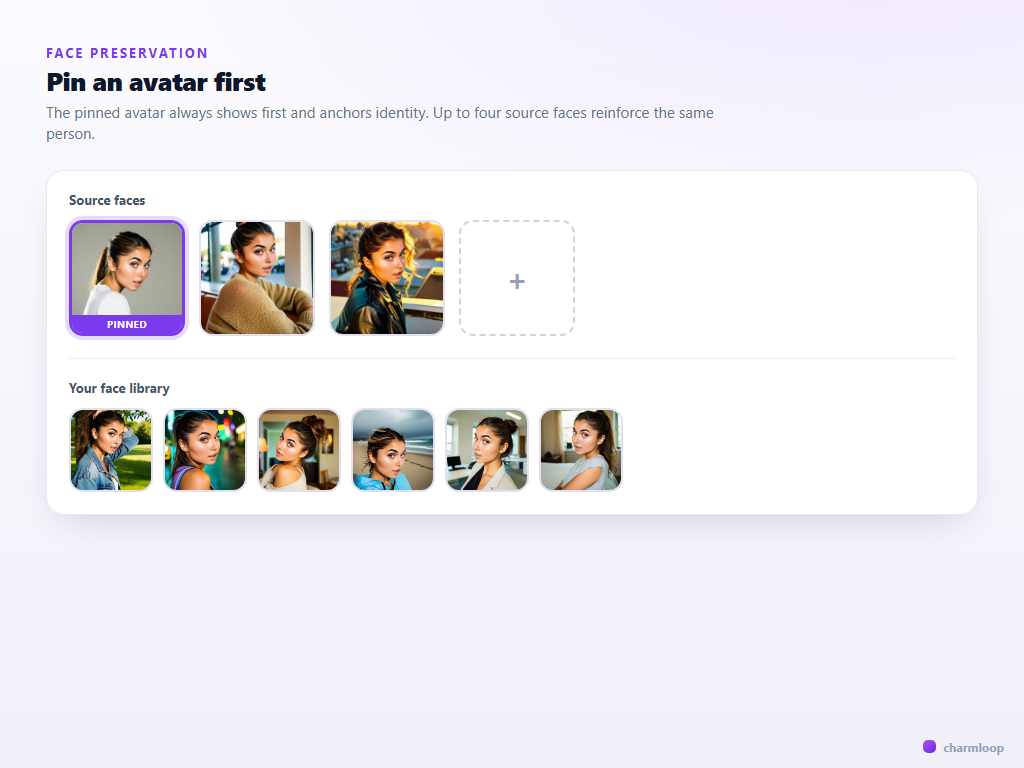
Сценарії облич Charmloop приймають до чотирьох вихідних облич на мультикартиночних рівнях (IP-Adapter, InstantID, варіанти PuLID). Користуйтеся слотами: закріплений + три підкріплення з різних ракурсів дають моделі набагато сильнішу ідентичність, ніж одне фото. Сильний набір — це портрет у три чверті, майже фронтальне фото і ракурс трохи в профіль.
Виберіть правильний рівень
Панель Face preservation дає чотири рівні. Вони міняють точність на вартість у токенах.
- None — повна свобода моделі, ідентичність не переноситься. Найдешевший. Беріть, коли людина не важлива — для стокового рендеру чи кадру оточення.
- ReActor only — швидкий face swap. Модель генерує довільне обличчя, потім ReActor підставляє ваше. Добре для портретів з одним обличчям, посередньо на профілях і нетиповому світлі.
- IP-Adapter + ReActor — ідентичність вшивається у саму генерацію через ембеддинги обличчя IP-Adapter, потім доводиться ReActor. Дефолтна рекомендація для більшості реалістичних задач із персонажем. Помітно краще тримає ідентичність на різних ракурсах, виразах і світлі.
- InstantID + IP-Adapter — найсильніший рівень, коли ідентичність має бути стабільною попри радикальні зміни пози, світла й стилю. Беріть, коли одна й та сама людина має з’являтися у геть різних сценах (крупний портрет, екшен у повний зріст, ракурс у три чверті) і всюди читатися як одна людина.
Надбавка за кожен рівень — не фіксований відсоток: вона залежить від рецепта, роздільної здатності, кількості кроків і розміру батча. Оцінка чармів поруч із кнопкою генерації показує точну вартість поточних налаштувань до запуску.
Просте правило: якщо вам треба один хороший портрет — досить ReActor. Якщо ви будуєте мультикадрову історію чи набір персонажів — IP-Adapter+ReActor або InstantID вартий додаткових чармів.
Не воюйте з face flow промптом
Типова помилка: ви обрали InstantID, маєте три хороші вихідні обличчя, а у промпті пишете «a different woman», «a blonde model», «anime style». Модель отримує дві суперечливі команди — зберегти ідентичність і змінити ідентичність — і ви отримаєте плутаний рендер, який не схожий ні на вихідне обличчя, ні на промпт.
Промпт описує сцену, одяг, світло, настрій. Він не переописує людину. Якщо ваш закріплений аватар — брюнетка із зеленими очима, не пишіть «blonde with blue eyes» — face flow буде з вами битися, і хтось програє.
a blonde woman with blue eyes, blue dress, beach, sunset
walking along an empty beach at sunset, light blue cotton sundress, hair tied back, soft golden hour light from camera-left, 50mm portrait, shallow depth of field
У сильному варіанті немає ні слова про колір волосся, очей чи форму обличчя. Це бере на себе закріплений аватар. Промпт описує тільки те, що навколо людини.
Увімкніть FaceDetailer на крупних планах
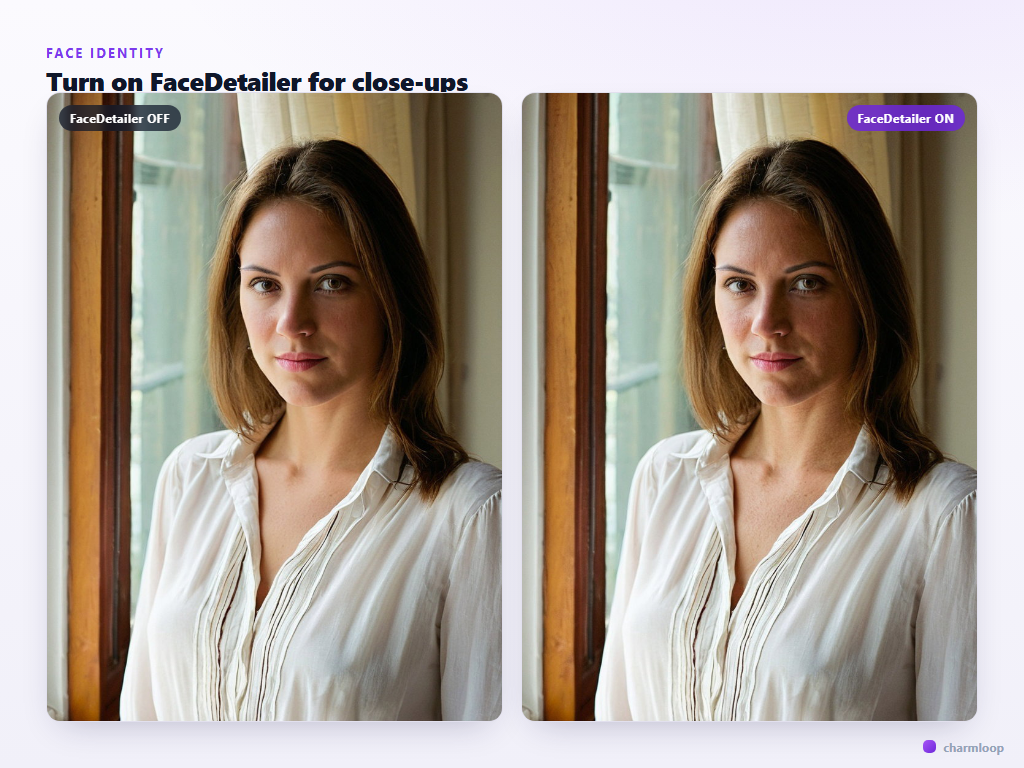
У панелі Post-processing Pro є тумблер Face Detailer. Вмикайте його, коли обличчя велике в кадрі — портрети, поясні кадри, будь-що, де обличчя займає більш ніж чверть зображення. FaceDetailer перерендерює зону обличчя у вищій деталізації і виправляє типові артефакти SDXL: асиметричні очі, розмазаний рот, втрачену деталь у райдужці.
Вимикайте на широких сценах оточення, де обличчя маленьке. Перерендер ділянки 60×60 px додає час і майже не допомагає.
Якість вихідних облич важливіша за все інше
Кожен рівень face flow успадковує якість тих облич, які ви йому даєте. Замилене фото з телефона, важко фільтроване селфі чи обличчя, перекрите окулярами, забруднять ембеддинг ідентичності — і модель витрачатиме кожен рендер на спробу звести розмитий сигнал докупи. Дві хвилини на нормальний підбір вихідних облич економлять десятки циклів переробок.
Як виглядають хороші вихідні обличчя:
- Фронтальне світло, нейтральний вираз. Великі прямі відблиски в обох очах. Без глибоких тіней під бровами чи підборіддям.
- Чистий фон. Візерунчастий чи захаращений фон протікає в ембеддинг. Однотонна стіна, нейтральне оточення на вулиці чи студійний сірий — оптимально.
- Волосся видно, але не закриває обличчя. Зібране назад або із центральним проділом — ідеально. Чубчик, який падає на одне око, дає асиметричний ембеддинг, що зміщує всі рендери.
- Обличчя займає 40–70% кадру. Маленькі обличчя у великих фото несуть менше інформації; впритул обрізані обличчя, що торкаються меж кадру, обрізають риси.
- Без фільтрів, важкого макіяжу, екстремальних ракурсів. Б’юті-фільтри знищують текстурні підказки, за якими face flow впізнає людину.
Якщо в бібліотеці тільки одне нормальне фото — нормально: закріпіть його і тримайтеся одноликих сценаріїв на кшталт ReActor. Якщо є три-чотири нормальні — спокійно беріть IP-Adapter або InstantID.
Кілька персонажів в одному кадрі
Мультикартиночні сценарії Charmloop приймають до чотирьох вихідних облич, але всі вони якоряться до однієї ідентичності. Щоб поставити в один рендер двох різних людей — двох персонажів у розмові, парний портрет — потрібен інший підхід: згенерувати кожного окремо і скомпонувати, або через img2img-проходи додавати другого персонажа поверх зафіксованого першого.
Робочий патерн: згенеруйте головного персонажа у потрібній позі, збережіть рендер і використайте його як джерело img2img на силі 0.6 з промптом, який описує другого персонажа, що заходить у кадр. На цьому другому проході поставте face flow на інший закріплений аватар. Модель збереже першого персонажа (img2img захищає наявні пікселі) і дорендерить нового в сцену.
Це одна з шорстких граней нинішньої технології збереження обличчя по всій індустрії — чистого «двоідентичного» сценарію поки що не існує. На двосценах плануйте композитну роботу.
Руки й очі — окремі проблеми
Face flow зберігає обличчя. Він не виправляє руки і не стабілізує напрямок погляду між рендерами. Для рук є окремий тумблер постобробки (Hand Detailer у панелі Post-processing) — вмикайте, коли руки видно і вони важливі.
З поглядом єдиний важіль — це промпт: «looking directly at camera», «looking down», «three-quarter glance to the right». Без вказівки напрямок погляду випадковий від генерації до генерації — і це руйнує консистентність персонажа навіть тоді, коли ідентичність зафіксована.
Далі — як композиція, кадрування і співвідношення сторін допомагають тому самому обличчю звучати по-різному → Композиція.