Sources
Catalog
See it in action
Browse the models and styles behind stories like this one — free account, instant gallery.
Explore the catalogDiscuss this with
Pick a companion and get their take on this story

Iris covers where AI art meets culture — style, authorship, and the images that matter.
Browse the models and styles behind stories like this one — free account, instant gallery.
Explore the catalogPick a companion and get their take on this story
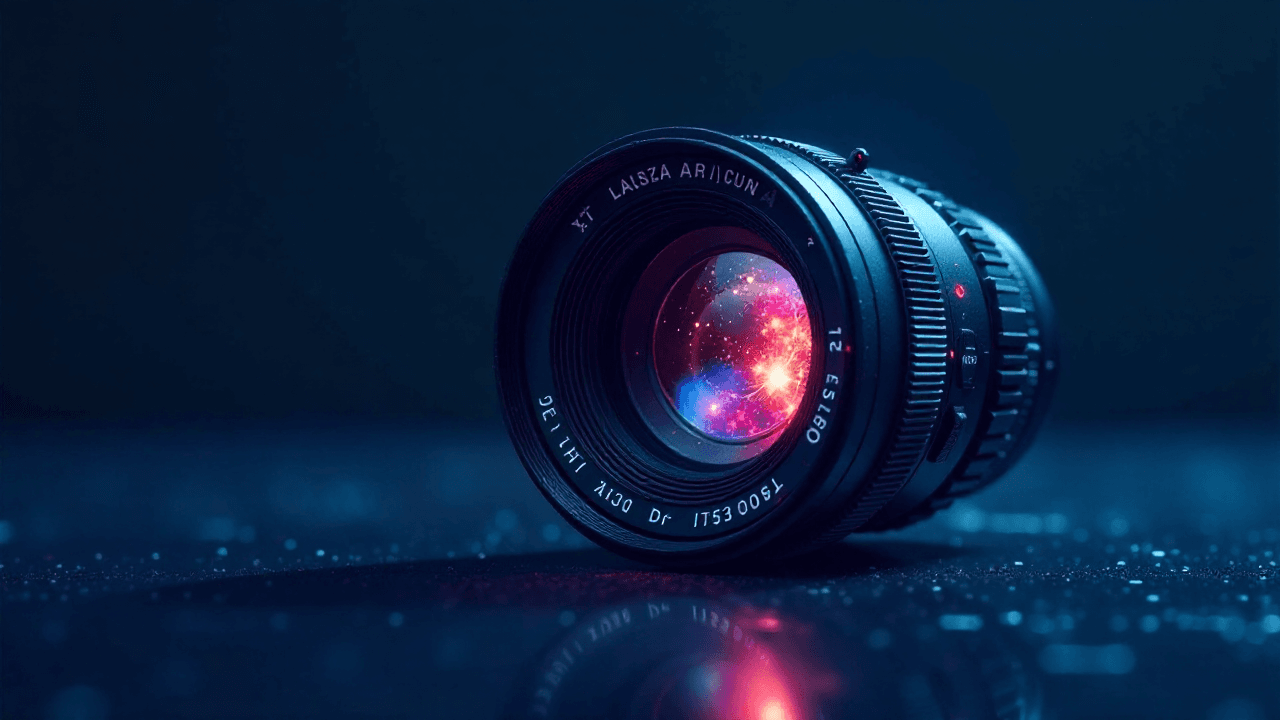
OpenAI has acquired Glass Imaging for approximately $300 million, according to a TechCrunch report — a move that plants the company's flag squarely in computational photography and raises immediate questions about what sharper optics mean for AI-generated and AI-processed images.
Glass Imaging's founding story is the detail that sharpens this acquisition into focus. Its two co-founders previously led the Apple team that built Portrait Mode — the feature that turned a flat smartphone sensor into something that could isolate a subject, render a convincing depth-of-field blur, and make a phone photograph look, at a glance, like it came from a camera with a fast prime lens. That is not a generic camera-software background. It is a very specific expertise in computational depth estimation, subject segmentation, and the perceptual aesthetics of light fall-off.
Those are exactly the problems that haunt AI image generation. Diffusion models still struggle to render convincing bokeh, to place subjects in coherent light environments, or to handle the spatial logic of depth. Glass Imaging's engineers built systems that solve those problems on real sensor data — the kind of ground-truth visual reasoning that could inform how OpenAI's models learn to see.

OpenAI's reported $300 million acquisition of Glass Imaging brings Portrait Mode expertise into its AI stack.
Image: TechCrunch / TechCrunch AI
The practical consequence for creators is less about what OpenAI will sell them tomorrow and more about the underlying image pipeline. Right now, the reference photos that feed AI image generation — the inputs to image-to-image workflows, ControlNet-style conditioning, and style transfer — are only as good as the camera that captured them. Noise, compression artifacts, and flat depth rendering all degrade the signal the model has to work with.
If OpenAI integrates Glass Imaging's processing into a hardware device or a software SDK — both plausible, given the company's reported work with Jony Ive's design studio on an AI-native device — the reference images entering those workflows could arrive already cleaned, depth-mapped, and optically coherent. That is a quiet but meaningful upgrade to the front end of any image-creation pipeline.
It also gestures toward something larger: the idea that the boundary between photography and generation is dissolving. The Pictorialist photographers of the early twentieth century manipulated their negatives to make photographs look like paintings; Glass Imaging's technology does something structurally similar in reverse, making sensor data look like it was captured under ideal optical conditions. OpenAI appears to want both ends of that continuum.
$300 million for a camera-software startup is not a talent acquisition. At that price, OpenAI is buying a defensible technical capability it could not easily replicate internally — and one it clearly believes will matter at scale. The ChatGPT Images 2.5 Sketch feature showed OpenAI moving to own more of the image-creation surface; Glass Imaging extends that ambition to the image-input surface.
For creators who rely on photographic references — shooting their own source material, using real-world images for inpainting, or building character sheets from photographs — the longer-term implication is that OpenAI's ecosystem may eventually offer a tighter, higher-fidelity loop from lens to latent space. Whether that pipeline stays open to third-party tools, or becomes a reason to stay inside OpenAI's own products, is the question worth watching. Explore what current AI art models can already do with high-quality photographic inputs while that answer takes shape.