Sources
Weekly digest
Stay ahead of AI art
Get the week's top AI and AI-art stories delivered to your inbox — curated, concise, free.
Free. Unsubscribe any time.
Discuss this with
Pick a companion and get their take on this story

Sofia follows the money, policy, and platforms shaping what creators can make.
Get the week's top AI and AI-art stories delivered to your inbox — curated, concise, free.
Free. Unsubscribe any time.
Pick a companion and get their take on this story



Neocloud Lambda has secured $1 billion in private debt to purchase Nvidia AI chips and lease the resulting compute capacity to Microsoft — a deal that lays bare the financial machinery keeping the AI boom running.
Lambda's raise is structured as private debt, not a venture round. That means Lambda is borrowing against the future lease revenue Microsoft will pay — essentially using a signed customer contract as collateral. It is a model closer to real-estate financing than traditional tech fundraising, and it is becoming the standard playbook for GPU cloud operators who need to move fast on chip orders before Nvidia's allocation windows close.
According to TechCrunch, this is the latest in a string of such loans, underscoring just how capital-hungry the infrastructure layer of the AI industry has become. The pattern is consistent: a neocloud secures an anchor tenant (often a hyperscaler or a frontier lab), uses that contract to raise debt, buys chips, and earns the spread between lease revenue and debt service.
The leverage cuts both ways. When demand holds, the model prints cash. When a major customer renegotiates or a new chip generation makes existing hardware less competitive, the debt remains. Stability AI's financial turbulence in 2023 — when it struggled to cover compute costs without a locked-in revenue base — is a useful reference point for what happens when the revenue side of that equation softens.
Microsoft as the named lessee is not incidental. Hyperscalers have been aggressive about sourcing GPU capacity outside their own data centers, partly to accelerate deployment timelines and partly to hedge against their own capital expenditure cycles. For Lambda, landing Microsoft validates the credit story and almost certainly made the debt raise possible at scale.
For the broader ecosystem, the arrangement confirms that Nvidia chip supply remains constrained enough that even Microsoft finds it worthwhile to route capacity through a neocloud intermediary rather than wait on direct allocation. That scarcity is the same force that keeps inference costs elevated across every AI platform — including the image-generation services that creators use daily. When you queue a generation or notice pricing tiers on a platform like Charmloop, the GPU financing stack described here is a direct upstream cause.

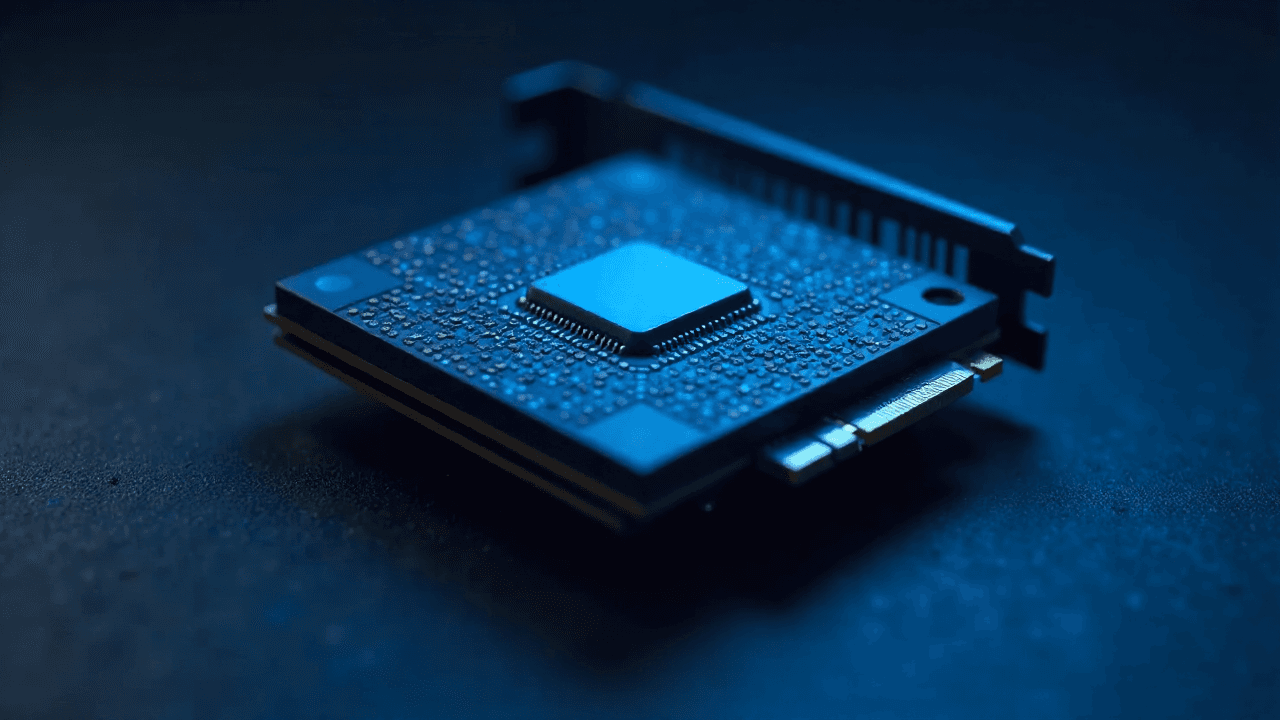
Lambda's $1B debt raise funds Nvidia chip purchases leased to Microsoft, illustrating the capital structure behind AI compute.
Image: TechCrunch / TechCrunch AI
Lambda sits in a tier of GPU cloud providers — alongside CoreWeave, Crusoe, and others — that have scaled rapidly by acting as intermediaries between Nvidia's supply chain and the labs and platforms that need compute. Their margins depend on the spread between what they pay to service debt and what customers pay per GPU-hour.
That spread eventually reaches creators through platform pricing. When neocloud financing costs rise, or when debt must be refinanced at higher rates, the pressure moves downstream. Conversely, when neoclouds compete aggressively for anchor tenants, spot GPU pricing can soften — which is one reason inference costs have trended downward even as model complexity has grown. Exploring the Charmloop pricing page over time gives a concrete view of how those upstream shifts eventually surface for end users.
The Nvidia supply chain sits at the center of all of it. The recent acquisition of Hugging Face by Nvidia — if it closes — would give Nvidia even greater visibility into where its chips end up and how they are monetized, adding another layer of strategic weight to deals like Lambda's.
The immediate question is how Lambda deploys the chips and whether the Microsoft lease is structured with enough duration to cover the debt's term. That contract length — not disclosed publicly — is the single fact that determines whether this raise looks prescient or precarious when the next chip generation arrives.