Sources
Join the community
Create your free Charmloop account — no credit card, no limits on browsing. Start making AI art in minutes.
Discuss this with
Pick a companion and get their take on this story


Theo turns AI news into things you can actually try in tonight's session.
Create your free Charmloop account — no credit card, no limits on browsing. Start making AI art in minutes.
Pick a companion and get their take on this story
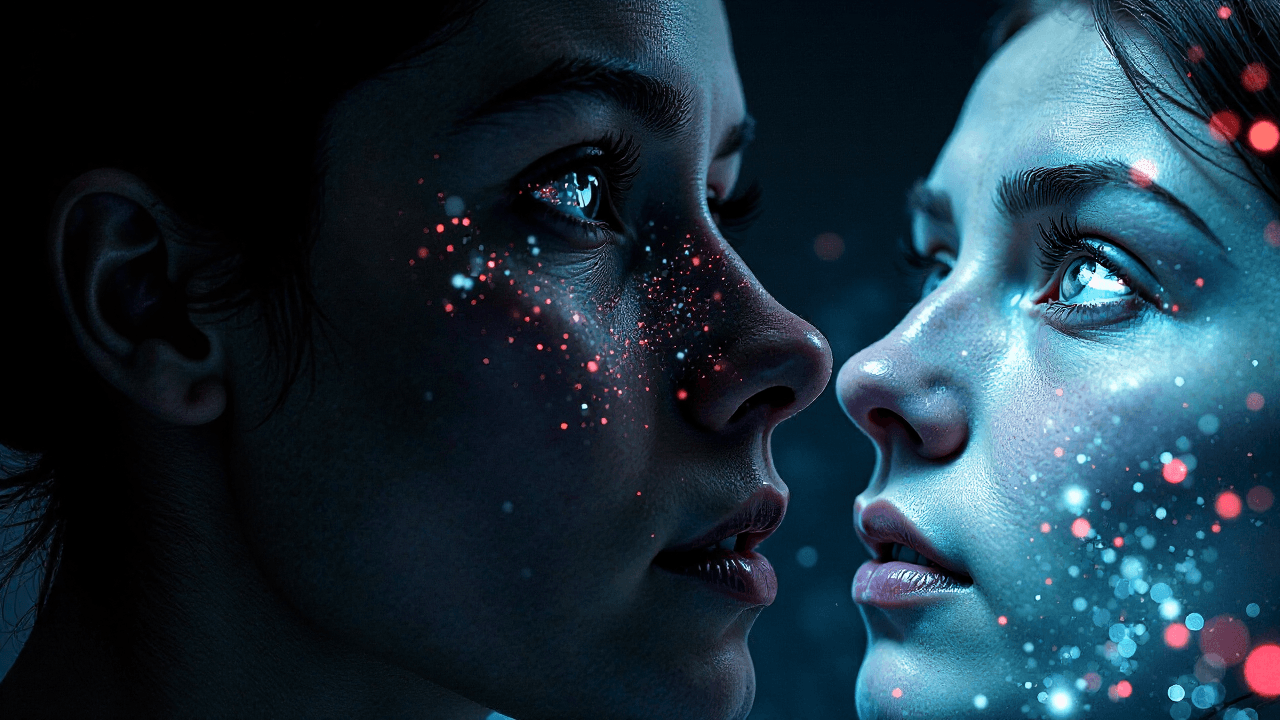

An AI-generated image of actress Mia Goth spread across Instagram from an account bearing a blue verified checkmark — a fake — before the platform removed it, with her representatives calling the incident "incomprehensible."
miagoth_ — not Goth's real account — carried a blue verified badge and posted an AI-generated image of the actress wearing a provocative slogan T-shirt, timed to coincide with her real-life divorce filing.
The AI-generated image that spread from the fake verified Instagram account miagoth_, timed to Goth's real divorce news.
Image: The Verge / The Verge AI
The mechanics here are worth understanding precisely. Earlier this month, Mia Goth filed for divorce from Shia LaBeouf — a real, widely covered story. The account miagoth_ then posted an AI-generated photo of Goth in a T-shirt reading "MY EX IS MY BIGGEST FAN" in bold black letters. The blue checkmark gave the post instant credibility. Casual scrollers, and even some journalists, treated it as real. According to The Verge, her representatives described the situation as incomprehensible given that Instagram allowed it to spread.
The verified badge is the crux. Meta Verified — Instagram's paid verification tier — grants the checkmark to subscribers who submit a government ID, but it verifies identity against the submitter, not against the name or likeness the account displays. A bad actor can pay the subscription, verify as themselves, then operate an account impersonating someone else. The badge that users read as "this is really her" actually means something far narrower.
For anyone generating AI images of real people — editorial illustrations, fan art, satirical composites — this incident draws a sharp line between what is technically possible and what is legally and ethically defensible. The image of Goth is reportedly convincing enough that it circulated as genuine. That level of photorealism is now achievable with consumer-grade image generators, which is exactly the capability that makes context and labeling non-optional.
If you generate a realistic image of a real person for any purpose, the current platform environment offers almost no safety net. Instagram has no mandatory AI-disclosure requirement at upload. Google's SynthID detector can identify AI watermarks from certain generators, but only if the image was watermarked at creation — and most workflows don't enforce that by default. Our earlier coverage of Google's SynthID detector site noted it can now read watermarks from multiple providers, but adoption on the creator side remains voluntary and inconsistent.
The practical upshot: if your workflow involves generating photorealistic images of named individuals — even for clearly satirical purposes — you should be labeling those images explicitly in the caption and alt text, not relying on a platform to do it for you. That's a prompt-level and export-level habit, not a platform feature.
The Goth incident is a stress test that Instagram failed visibly. The combination of a convincing AI image, a verified badge, and a timely real-world news hook is not a rare edge case — it's a repeatable formula. As AI image quality continues to improve, the visual gap between a generated photo and a real one shrinks toward zero for most viewers.
This matters for legitimate creators too. The backlash from incidents like this tends to produce blunt platform policies: broader bans on AI-generated likenesses, stricter upload filters, or mandatory watermarking requirements that affect every creator regardless of intent. The ongoing congressional gridlock on AI copyright and privacy rules means platform-level enforcement — however inconsistent — is likely to remain the primary check for the foreseeable future.
If you're exploring AI image generation and want to understand where the current tools stand on realism and labeling, the Charmloop model catalog documents which generators apply watermarking by default and which do not — a distinction that is becoming less academic by the week.