Sources
Try it free
Make it yours
Inspired by this story? Turn the idea into your own AI art in seconds — free to start, no card required.
Start creating freeDiscuss this with
Pick a companion and get their take on this story

Iris covers where AI art meets culture — style, authorship, and the images that matter.
Inspired by this story? Turn the idea into your own AI art in seconds — free to start, no card required.
Start creating freePick a companion and get their take on this story
OpenAI launched ChatGPT Images 2.5 on Tuesday, and its headline feature — Sketch — lets you draw a rough shape directly inside the chat window, then describe in text how you want it turned into a finished image.
The workflow is simpler than it sounds. You draw something — a rough cat silhouette, a room layout, a figure in a landscape — directly in the ChatGPT interface, then type what you want the finished image to look like. The model interprets your spatial intent and renders accordingly, according to The Verge.

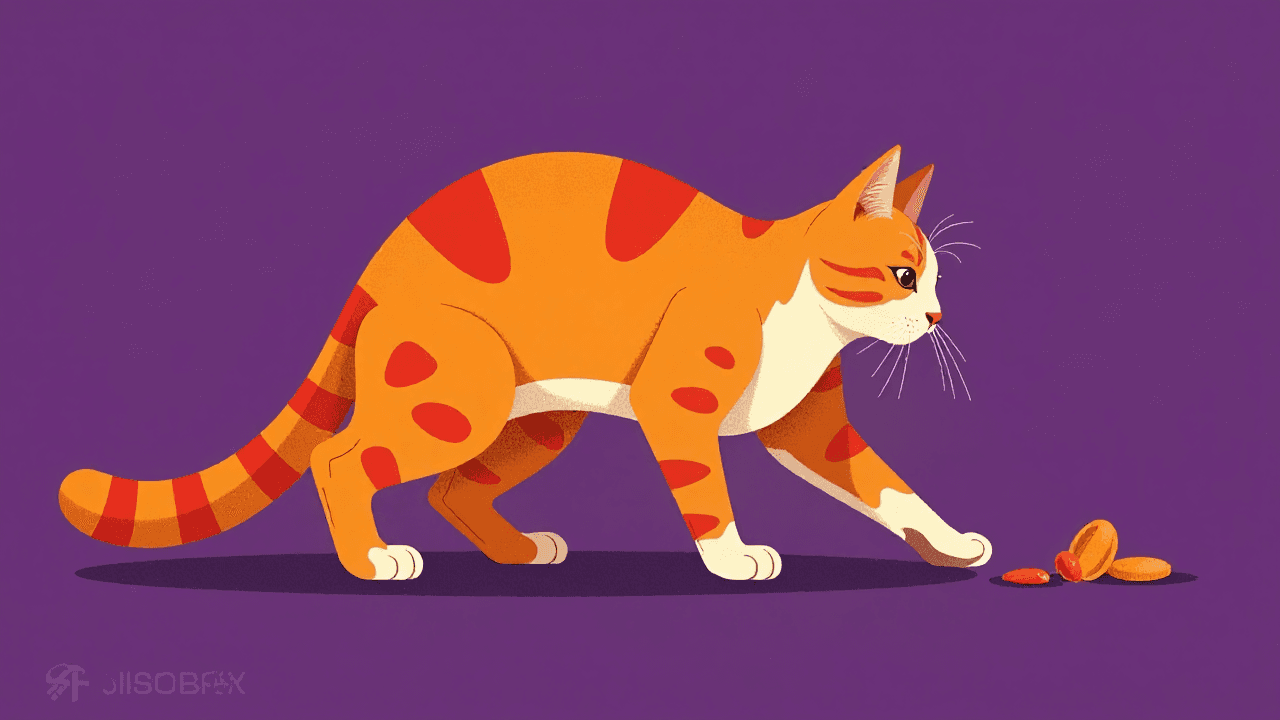
An AI-generated image of a cat produced by ChatGPT Images 2.5 from a hand-drawn sketch.
Image: The Verge / The Verge AI
For AI-art creators, the practical shift here is about composition control. Text prompts are precise about subject and style but notoriously slippery about spatial arrangement — getting a figure in the left third of the frame, or a horizon line at a specific height, has always required either inpainting workarounds or elaborate prompt engineering. Sketch hands that control back to the creator's hand, literally. A ten-second doodle can fix what three paragraphs of prompt text cannot.

ChatGPT Images 2.5's Sketch interface, showing a hand-drawn input being transformed into a rendered AI image.
Image: The Verge / The Verge AI
The lineage here is worth naming: this is the logic of the cartoon rough, the animator's thumbnail, the gestural underdrawing that has anchored visual composition since the Renaissance. Sketch doesn't replace that tradition — it digitises the first step of it and hands the rendering off to a model.
Creators who currently rely on inpainting, ControlNet-style pose references, or image-to-image workflows to fix spatial composition now have a native, low-friction alternative inside ChatGPT. The doodle doesn't need to be good — that's the point. The model is reading intent, not draftsmanship.
That said, the quality ceiling of any sketch-based approach depends on how well the underlying image model interprets loose spatial input. ChatGPT Images 2.5 is a new model, not just a UI layer on an existing one, so its fidelity to spatial cues will need testing against real creative tasks. Creators used to the precision of dedicated tools like ControlNet or Stable Diffusion's regional prompting should treat Sketch as a fast-iteration starting point rather than a final-output pipeline.
For anyone building characters or scenes on Charmloop, Sketch could compress the early concepting phase — roughing a pose or a scene layout before committing to a full image generation run. The guides at /learn cover composition-focused prompting techniques that pair naturally with this kind of spatial input.
When the compositional skeleton of an image comes from a human hand — even a clumsy one — and the model fills in every surface detail, the question of creative authorship gets genuinely interesting. Sketch puts more of the generative decision-making back in the creator's hands than a pure text prompt does, which matters both aesthetically and, increasingly, legally. The drawing is yours; the rendering is the model's. That split is cleaner than most AI image workflows offer.
OpenAI hasn't detailed pricing specifics for Images 2.5 beyond its availability inside ChatGPT. Creators evaluating model choice for composition-heavy work now have a concrete reason to test it alongside their existing tools.