Sources
Weekly digest
Stay ahead of AI art
Get the week's top AI and AI-art stories delivered to your inbox — curated, concise, free.

Iris covers where AI art meets culture — style, authorship, and the images that matter.
Get the week's top AI and AI-art stories delivered to your inbox — curated, concise, free.
Free. Unsubscribe any time.
Pick a companion and get their take on this story

Caterpillar is applying its decades-long playbook for running autonomous haul trucks in remote mine pits to the problem of deploying AI in demanding industrial settings — a pivot that signals how operational muscle, not just model quality, is becoming the differentiator in enterprise AI.
Running a 300-tonne driverless truck through a Pilbara iron-ore pit is nothing like running a language model on a cloud server, except in the ways that matter most: the system must not fail, the environment is hostile, and no engineer is standing next to the machine when something goes wrong. Caterpillar spent years building redundancy, remote-monitoring pipelines, and edge-case libraries for exactly those conditions. According to TechCrunch, the company is now treating that operational discipline as transferable capital.
The lesson is blunt: a system that scores well on controlled tests but degrades unpredictably under dust, vibration, or connectivity loss is useless. Caterpillar's engineers learned to build for the failure mode, not the success case. That instinct — stress-test the edge, not the average — is precisely what most AI deployments lack.

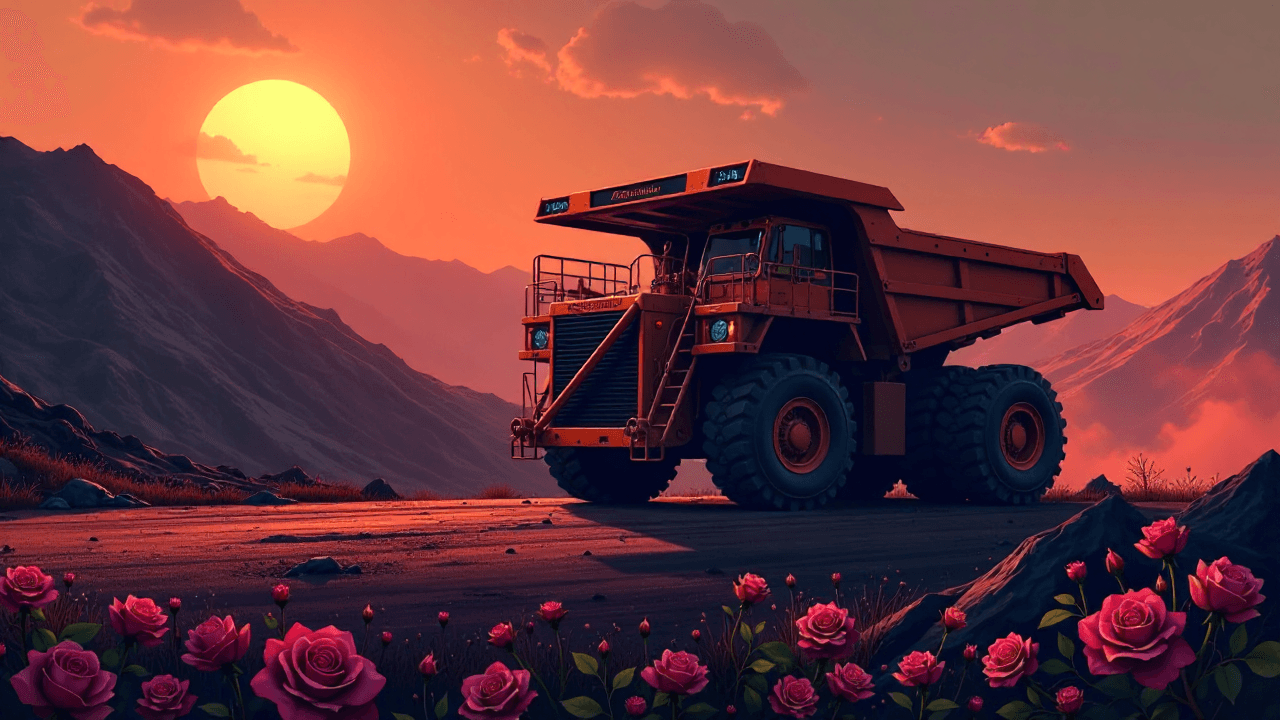
Caterpillar's autonomous haulage systems, developed over decades in remote mining operations, are now informing its approach to industrial AI deployment.
Image: TechCrunch / TechCrunch AI
The broader AI industry tends to compete on model capability: parameter counts, benchmark ranks, inference speed. Caterpillar's framing inverts that hierarchy. What it is bringing to AI deployment is not a new model — it is a methodology for keeping complex autonomous systems alive and auditable in environments where failure carries physical consequences.
That methodology includes remote diagnostics, staged rollout protocols, and the kind of failure-mode documentation that takes years of real-world incident data to build. These are not glamorous capabilities, but they are the ones that determine whether an AI deployment survives contact with an actual factory floor or mine site.
For the AI infrastructure sector, this matters because it reframes what expertise is worth. A company like Caterpillar arrives at AI deployment not with the strongest model weights but with the deepest institutional memory of what breaks, and when, and why. That is a moat that cannot be replicated by spinning up a new training run.
Caterpillar's move is part of a wider pattern in which industrial incumbents are asserting that operational track records — not AI-native origins — are the relevant credential for high-stakes deployment. The open-weight AI acquisition wave sweeping Silicon Valley is producing powerful models at speed; the harder problem, as Caterpillar's history illustrates, is running them reliably at the edge.
For AI-art creators, the infrastructure implications are indirect but real. The compute and reliability standards being set by industrial deployments like Caterpillar's eventually shape the cloud and edge hardware that powers image-generation platforms. Higher uptime expectations and more rigorous edge-case handling upstream mean more stable, consistent generation environments downstream — the kind of reliability that makes iterating on a complex prompt less of a gamble.
The companies that figure out how to marry model capability with operational discipline — the way Caterpillar is attempting — are the ones most likely to define what AI infrastructure looks like in five years. The pit mine, it turns out, was a long rehearsal.