Sources
Try it free
Make it yours
Inspired by this story? Turn the idea into your own AI art in seconds — free to start, no card required.
Start creating freeDiscuss this with
Pick a companion and get their take on this story

Elias unpacks the research behind the headlines in plain language.
Inspired by this story? Turn the idea into your own AI art in seconds — free to start, no card required.
Start creating freePick a companion and get their take on this story



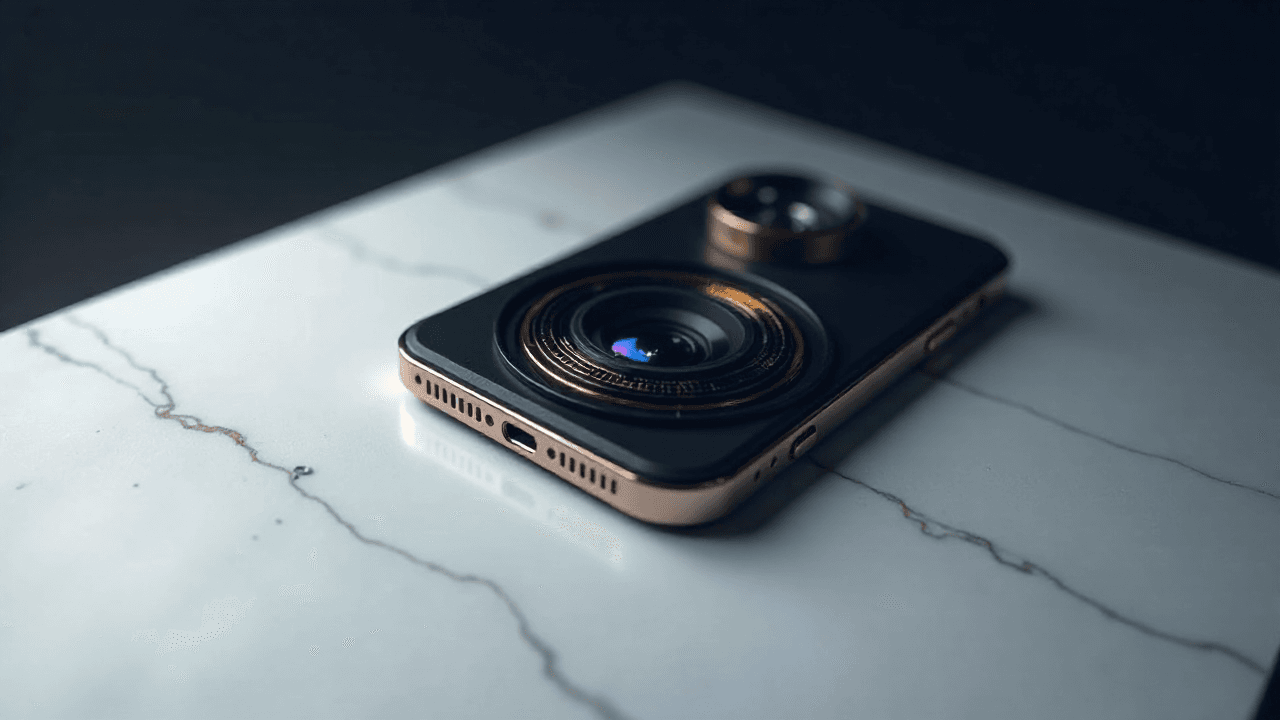
Apple's new Reference Image feature, shipping with the iPhone 18 Pro later this month, uses the device's camera sensor to cryptographically sign photos at the moment of capture — creating a verifiable record that the image has not been edited or AI-generated.
Cryptographic signing, in plain terms, is a process where a piece of data is run through a mathematical function to produce a unique fingerprint; if even one pixel changes afterward, the fingerprint no longer matches. Apple's implementation does this at the sensor itself, before any processing pipeline can touch the image. According to The Verge, the iPhone 18 Pro and its siblings will "sign every pixel" the sensor sees at the moment of capture.
The practical result: a Reference Image acts as a ground-truth original. Anyone — a publisher, a competition judge, a social platform — can compare a submitted photo against its Reference Image to see whether it has been cropped, retouched, or run through an AI upscaler or inpainting tool.

Apple demonstrated Reference Image signing on the iPhone 18 Pro at its September 2026 launch event.
Image: The Verge / The Verge AI
The feature arrives as platforms are already struggling with provenance. Instagram's AI content labels have been misfiring on human-made photos, flagging authentic images as AI-generated and leaving photographers publicly misidentified. Reference Image flips that problem: instead of a platform guessing after the fact, the camera asserts authenticity at the point of creation.
For photojournalism and documentary work, that distinction is significant. A signed Reference Image is hardware-attested evidence, not a software tag that could theoretically be spoofed or stripped.

Apple's Reference Image interface lets users place the signed original beside any edited copy to spot differences.
Image: The Verge / The Verge AI
Here is where the implications get concrete for anyone working with AI image generation. Reference Image does not help AI-generated work — it is specifically designed to exclude it. Images produced in tools like those on Charmloop's generator carry no sensor-level signature, because there is no camera sensor involved. That is not a criticism; it is simply a structural difference.
What it does signal is a broader industry direction. If hardware-attested provenance becomes a standard expectation on platforms that care about authenticity — stock photography, editorial licensing, competition circuits — AI-generated images will need their own provenance story: model version, prompt metadata, generation timestamp, and watermarking standards like C2PA (the Coalition for Content Provenance and Authenticity, an open technical standard for attaching verifiable content credentials to media files).
Creators who are already embedding metadata and using platforms that support C2PA tagging are ahead of that curve. Those who are not may find their work harder to place in contexts where provenance is checked.
Apple has not yet detailed how Reference Image files are stored, whether they are uploaded to iCloud or kept on-device only, or how third-party apps and platforms will access the comparison API. It is also unclear whether the feature will be available at iPhone 18 Pro launch or roll out in a subsequent software update — TechCrunch notes that Apple introduced the feature alongside the new lineup but stopped short of specifying an exact availability date.
Those details matter for publishers and platforms deciding whether to build Reference Image verification into their submission workflows. Until Apple publishes the developer documentation, the practical reach of the feature remains an open question — one worth watching as the iPhone 18 Pro ships.