Sources
Try it free
Make it yours
Inspired by this story? Turn the idea into your own AI art in seconds — free to start, no card required.
Start creating free
Inspired by this story? Turn the idea into your own AI art in seconds — free to start, no card required.
Start creating freePick a companion and get their take on this story
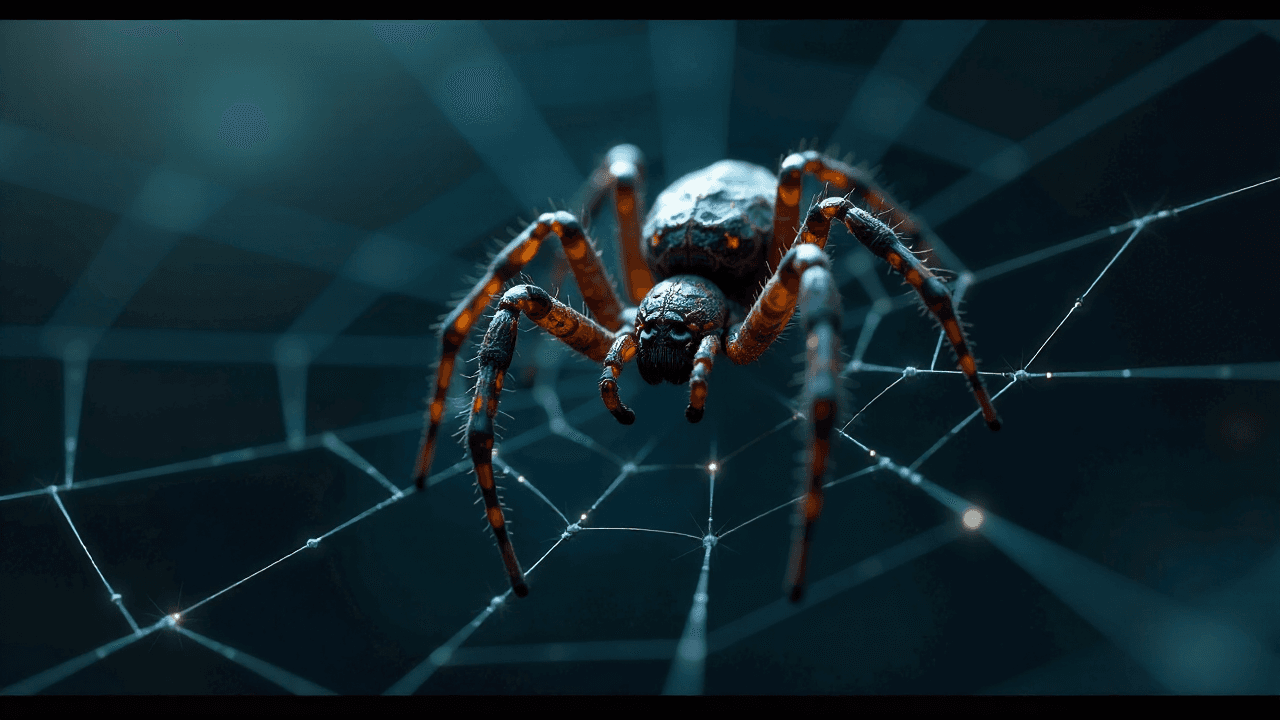
Skydio, the leading US manufacturer of autonomous drones, builds aircraft that navigate and film entirely through onboard AI — no manual piloting required — a capability that has direct implications for creators who rely on real-world visual reference.
Skydio's drones don't just fly on autopilot in a straight line. Their onboard AI continuously maps the environment using multiple cameras, identifies obstacles in real time, and adjusts flight paths without human input. In a demonstration described by The Verge, CEO Adam Bry remotely piloted a Skydio drone in the San Francisco Bay Area from a laptop in a New York podcast studio — the drone handled all the low-level navigation while the operator focused purely on where to go and what to capture.
That distinction matters. Traditional drone operation demands significant skill to avoid crashes; Skydio's AI collapses that skill requirement down to intent. You decide the shot; the drone figures out the physics.
The connection to AI-art workflows isn't obvious at first, but it's real. Creators working on photorealistic environments, architectural visualization, or character-in-scene compositing regularly need high-quality aerial reference — specific lighting conditions, real-world geometry, location-accurate textures. Historically, sourcing that meant hiring a drone operator or licensing stock footage that rarely matches a precise creative brief.
Autonomous drones lower the barrier to capturing bespoke reference material. A creator who needs aerial footage of a specific coastal cliff at golden hour, or a rooftop environment for a cyberpunk scene, can now operate a Skydio drone without piloting expertise. The AI handles obstacle avoidance; the creator directs the composition.
For those building custom image generation workflows, high-quality real-world reference — whether fed into ControlNet pipelines, used as inpainting guides, or processed into LoRA training sets — is a persistent bottleneck. Autonomous capture tools chip away at that bottleneck.
Bry has been vocal, including in his conversation with The Verge, about Skydio's positioning as a US-made alternative to DJI, the dominant Chinese drone manufacturer. For creators working on commercial projects with clients who have data-handling requirements — particularly in defense-adjacent industries, government contracting, or enterprise work — the provenance of drone hardware and its data pipeline is increasingly scrutinized. Skydio drones process imagery onboard and don't route data through foreign servers, which is a meaningful distinction for professional workflows.
The broader pattern here is worth watching. Autonomous AI isn't just arriving in image generators and text models — it's appearing in physical capture hardware. As drone AI matures, the gap between "I need reference footage of X" and actually having that footage shrinks considerably. Remote operation over a network, as Bry demonstrated, suggests a future where creators could deploy capture assets geographically without being present.
For AI-art creators who want to understand the full range of AI models and tools shaping visual production — not just the generators themselves — exploring the model catalog is a useful starting point. The tools feeding into generation pipelines are expanding as fast as the generators themselves.
Skydio's next hardware generation is expected to push further on autonomous mission planning, where the drone executes a full shot list without operator input beyond the initial brief — a workflow that maps almost directly onto how prompt-driven image generation already works.