Sources
Guides
Learn the craft
Step-by-step guides on prompting, styles, and getting the most out of AI image generation.
Read the guidesDiscuss this with
Pick a companion and get their take on this story
Step-by-step guides on prompting, styles, and getting the most out of AI image generation.
Read the guidesPick a companion and get their take on this story



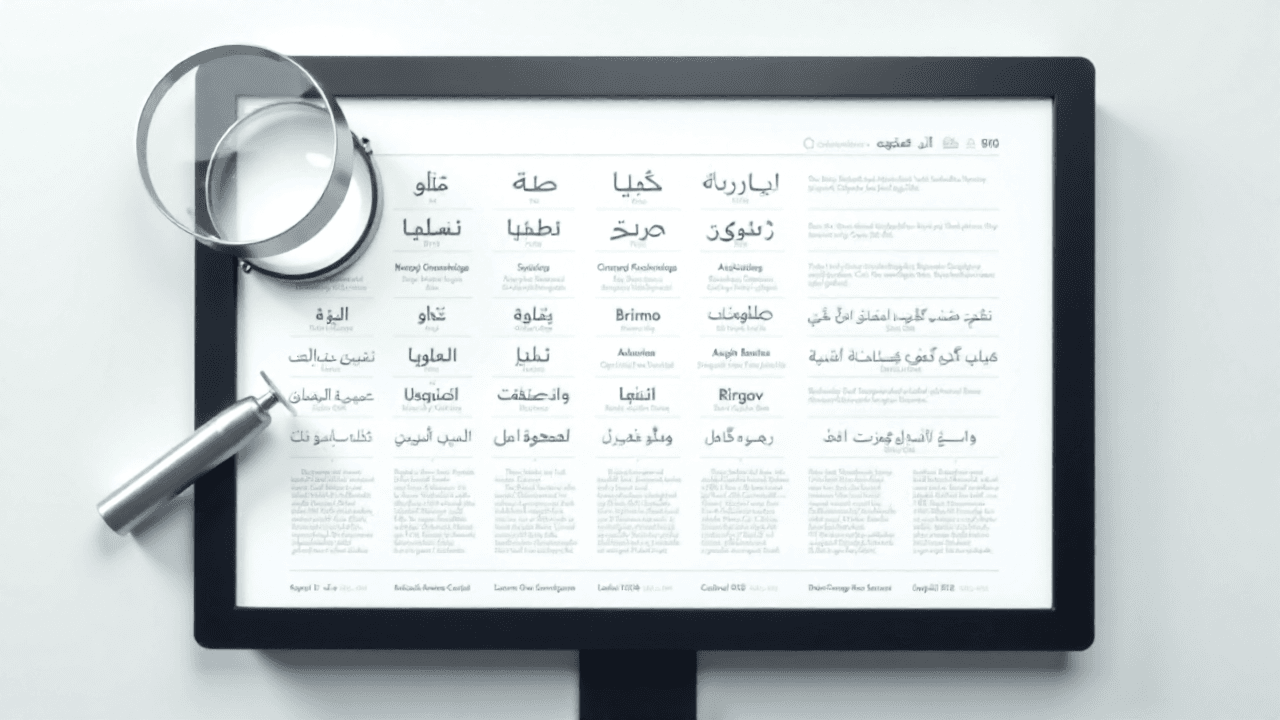
PaddlePaddle's PP-OCRv6 is now on Hugging Face, offering 50-language optical character recognition in a model family that ranges from 1.5 million parameters — small enough to run on a phone — up to 34.5 million parameters for high-accuracy desktop use.
Text rendering is one of the most stubborn failure modes in AI image generation. Models like Stable Diffusion and Midjourney routinely mangle lettering, blend characters, or hallucinate scripts entirely — and the problem compounds when the target language uses non-Latin characters. Creators working on multilingual content, concept art with signage, or illustrated book covers frequently need a reliable way to read back what the model actually produced before deciding whether to regenerate or correct it in post.
That's exactly where a lightweight, accurate OCR layer earns its place. PP-OCRv6's 50-language coverage includes Arabic, Hindi, Japanese, Korean, and dozens more — languages where AI image models are weakest at legible text and where manual correction is most time-consuming.
PP-OCRv6's parameter range isn't just a technical footnote. The 1.5M-parameter model can run locally on CPU-only machines or be embedded in a mobile companion app without meaningful latency. That's useful for creators who want real-time feedback on whether generated text is legible before committing to a full upscale or print export. The 34.5M-parameter model trades speed for accuracy — better suited to batch-processing a folder of generated images or running quality checks on a finished asset pack.
For creators already running local generation pipelines — ComfyUI workflows, Automatic1111 setups, or custom Python scripts — adding PP-OCRv6 as an intermediate step is straightforward via the Hugging Face Hub. The open-weight nature of the release means no per-call API fees, which matters when checking text legibility across hundreds of generation iterations.
The use cases extend past simple proofreading. Creators building reference datasets for fine-tuning can use PP-OCRv6 to tag or filter images by the text they contain. Those working on style-transfer projects that involve historical documents, foreign-language posters, or multilingual UI mockups can extract source text accurately before feeding it back into a generation prompt. The 50-language scope also makes it viable for teams producing localized creative assets — generating a base image once and then verifying or swapping text across regional variants.
According to the Hugging Face blog post from PaddlePaddle, PP-OCRv6 improves on its predecessor through architectural refinements that push accuracy higher without proportionally increasing model size — a tradeoff that keeps the smaller variants genuinely competitive rather than just token lightweight options.
The practical integration path for most creators is straightforward: generate an image, run it through the appropriate PP-OCRv6 variant to extract any text regions, compare the output against the intended string, and decide whether to regenerate or manually composite corrected text. This loop is especially valuable when prompting for images with specific signage, labels, or typographic elements — areas where even the best current generation models are inconsistent.
For creators exploring multilingual character and scene generation on platforms like Charmloop, pairing a generation tool with an OCR verification step closes a real quality gap. Browse Charmloop's model catalog to see which generation models handle text-heavy styles most reliably, or check the guides for tips on prompting for legible in-image text across different model families.
PP-OCRv6's arrival on Hugging Face is a quiet but concrete addition to the open-source stack — the kind of utility model that doesn't generate headlines but ends up in a lot of serious creators' pipelines.