Sources
Talk it over
Discuss stories like this with an AI companion who remembers you. Create your free account and say hi.
Meet your companionDiscuss this with
Pick a companion and get their take on this story
Discuss stories like this with an AI companion who remembers you. Create your free account and say hi.
Meet your companionPick a companion and get their take on this story



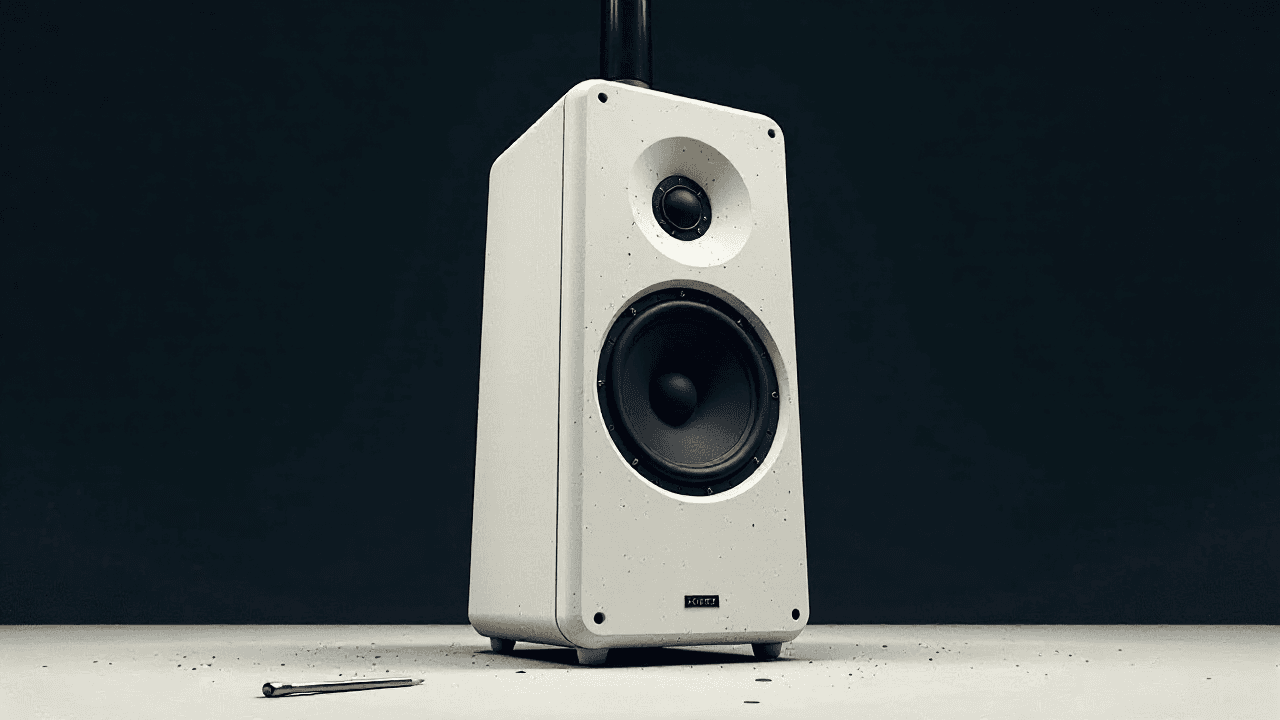
OpenAI's first hardware product is reportedly a screenless smart speaker with mechanical parts that move on their own, a built-in camera, and environmental sensors — designed explicitly to "feel like a companion and become a physical manifestation of OpenAI's ChatGPT," according to a Bloomberg report cited by The Verge.

OpenAI's first hardware device is reportedly a screenless, moving smart speaker designed to embody ChatGPT as a physical companion.
Image: TechCrunch / TechCrunch AI
The moving mechanical elements are the most striking detail in Bloomberg's account, and the one that separates this device most sharply from competitors like Amazon Echo or Google Nest. A speaker that physically reorients itself — presumably to track a speaker, adjust audio direction, or signal attentiveness — is a deliberate design statement: this thing is meant to feel alive. Combined with a camera that reads the room and sensors that map the environment, the device is closer in ambition to a social robot than a traditional smart speaker.
That companion framing matters a lot for how the underlying AI will need to perform. A device that presents itself as a physical presence has to handle conversation with far more naturalness than a speaker you shout commands at. OpenAI's GPT-Live-1 voice model, which can speak and listen simultaneously and hold pauses more naturally, looks like a direct technical prerequisite for making this hardware feel credible. Latency and conversational rhythm — not just answer quality — become the product.
For AI creators and power users, the more consequential implication is what a camera-equipped, environment-aware ChatGPT device could do beyond conversation. A speaker that understands your physical space could, in theory, respond to what's on your desk, describe a sketch, or give feedback on a printed image — extending multimodal AI into an ambient, hands-free context. That's a meaningfully different interaction model than pulling up an AI image generator on a phone or laptop.
OpenAI has been signaling a push toward family and household use cases for some time, including a dedicated product manager role for family-focused ChatGPT experiences. A living-room speaker that embodies ChatGPT as a companion is the logical hardware expression of that strategy.

OpenAI's hardware ambitions mark a significant expansion beyond software and APIs.
Image: The Verge / The Verge AI
Calling a device a "companion" and building mechanical movement into it raises the stakes considerably. Smart speakers from Amazon and Google have spent years fighting the perception that they're passive cylinders waiting to be addressed. OpenAI is going the opposite direction — leaning into presence, personality, and physical expressiveness as features.
That's a bet on users wanting an AI that feels like it's there, not just on. Whether that reads as warm or unsettling will vary sharply by person, and it puts enormous pressure on the quality of ChatGPT's voice and reasoning. A companion that gives a wrong answer or awkward pause while physically moving toward you is a much more jarring failure mode than a speaker that just says "I'm not sure."
Bloomberg's report does not specify a price point or a firm release date, though TechCrunch notes an announcement could come this year. Given OpenAI's ongoing legal friction — including Apple's recent lawsuit over alleged trade secret theft — the path from prototype to retail will be closely watched. If the device ships anywhere near the companion-robot ambition Bloomberg describes, it will be the most distinctive piece of consumer AI hardware since the original Amazon Echo — and considerably more personal.