Sources
Catalog
See it in action
Browse the models and styles behind stories like this one — free account, instant gallery.
Explore the catalogDiscuss this with
Pick a companion and get their take on this story
Browse the models and styles behind stories like this one — free account, instant gallery.
Explore the catalogPick a companion and get their take on this story



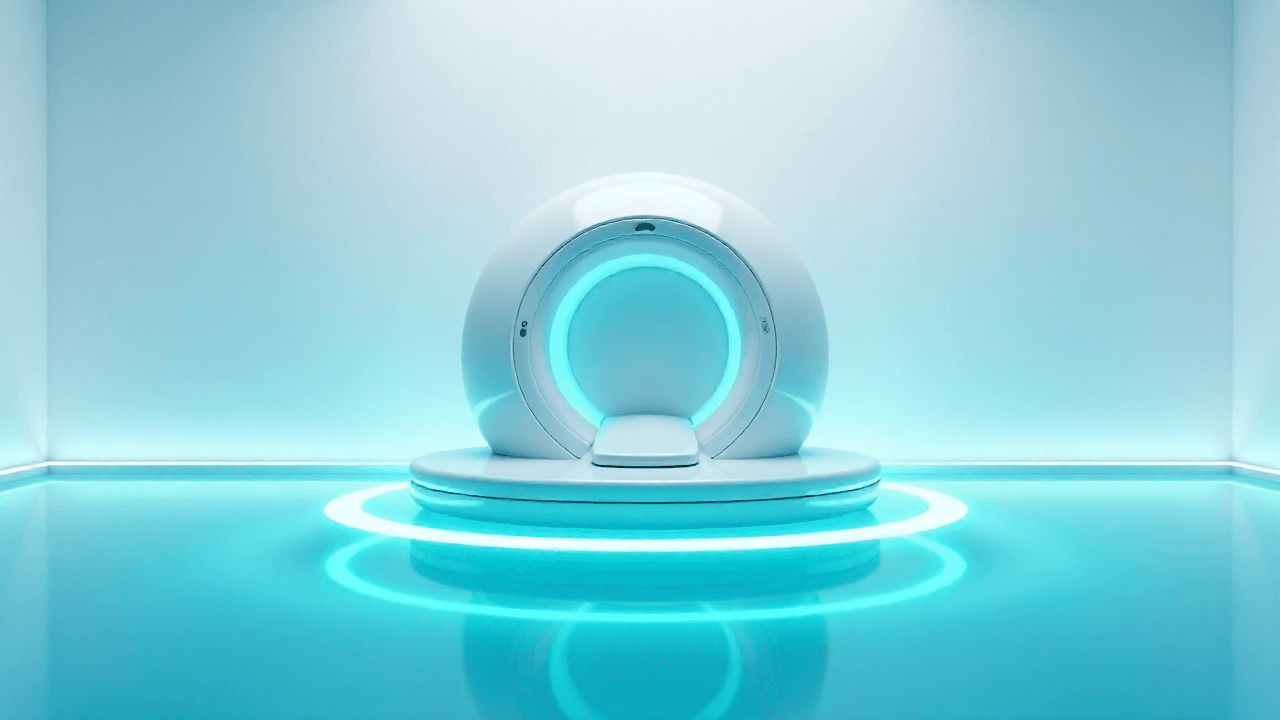
Midjourney's newly announced full-body ultrasound scanner is drawing sharp skepticism from medical experts and tech reporters, with The Verge flagging a notable lack of clinical evidence behind the company's bold performance claims — a pivot that raises real questions about where the image-generation platform is actually headed.
Holz described the scanner as capable of producing imaging "as powerful as MRI" while being "as casual as a trip to the spa" — a striking comparison that positions the device against hospital-grade diagnostic equipment. The pitch is that immersive water-based ultrasound, combined with AI processing, could democratize body imaging in a way traditional MRI machines, which cost millions of dollars and require specialist operators, cannot.
The problem, according to The Verge's reporting, is that Midjourney has not produced clinical trial data, peer-reviewed studies, or independent validation to back those comparisons. Medical imaging experts consulted in that report were skeptical that ultrasound — even AI-enhanced — can replicate MRI's soft-tissue resolution across the full body. MRI and ultrasound operate on fundamentally different physical principles: MRI uses magnetic fields and radio waves; ultrasound uses sound waves, which attenuate and scatter in ways that limit whole-body imaging fidelity.
For AI-art creators, the immediate reaction might be: why does this matter to me? The answer is about resource allocation and strategic focus. Midjourney has been one of the most creatively capable image-generation platforms available — its v6 and v6.1 models remain competitive benchmarks for photorealistic and stylized output. But hardware development, especially in regulated medical device territory, is extraordinarily capital-intensive and slow-moving. FDA clearance alone can take years.
Midjourney has not announced any cuts to its image-generation roadmap, and the company has not said the scanner replaces its core product. Still, a company that was already unusual for running a major AI platform without traditional venture-scale funding is now apparently splitting attention between generative art and medical hardware — two domains with almost nothing in common in terms of regulatory environment, go-to-market strategy, or engineering discipline.
For creators who have built workflows around Midjourney — using its distinctive aesthetic rendering for character design, concept art, or illustration — the scanner announcement offers no new prompting capabilities, no model updates, and no pricing changes. If anything, it introduces uncertainty about where the company's engineering priorities will sit over the next 12 to 18 months.
There's a secondary issue worth tracking: how Midjourney handles public scrutiny of the scanner's claims will signal something about the company's broader relationship with evidence and transparency. Image-generation platforms live and die on trust — trust that model quality claims are real, that pricing is fair, that the roadmap is honest. A medical announcement that overpromises and underdelivers on evidence doesn't stay contained to the health vertical; it colors how seriously observers take the company's other technical claims.
The scanner is not shipping imminently, and Midjourney has not disclosed pricing, availability, or regulatory filing status. Until clinical data appears, the MRI comparison is a marketing claim, not a technical specification.
Creators evaluating their model options for the months ahead should watch whether Midjourney's next major update arrives on schedule — that will be a more reliable signal of the company's creative focus than any hardware announcement. And if you're comparing platforms right now, Charmloop's pricing page has a breakdown of what different tiers actually get you in terms of generation quality and volume.