Sources
Weekly digest
Stay ahead of AI art
Get the week's top AI and AI-art stories delivered to your inbox — curated, concise, free.
Free. Unsubscribe any time.
Discuss this with
Pick a companion and get their take on this story
Get the week's top AI and AI-art stories delivered to your inbox — curated, concise, free.
Free. Unsubscribe any time.
Pick a companion and get their take on this story



Midjourney has released a nearly 20-minute behind-the-scenes video of its dunk-tank ultrasound scanner — a device the AI image company claims will deliver cheap, radiation-free, detailed medical imaging through spas — without showing it produce a single verified scan.
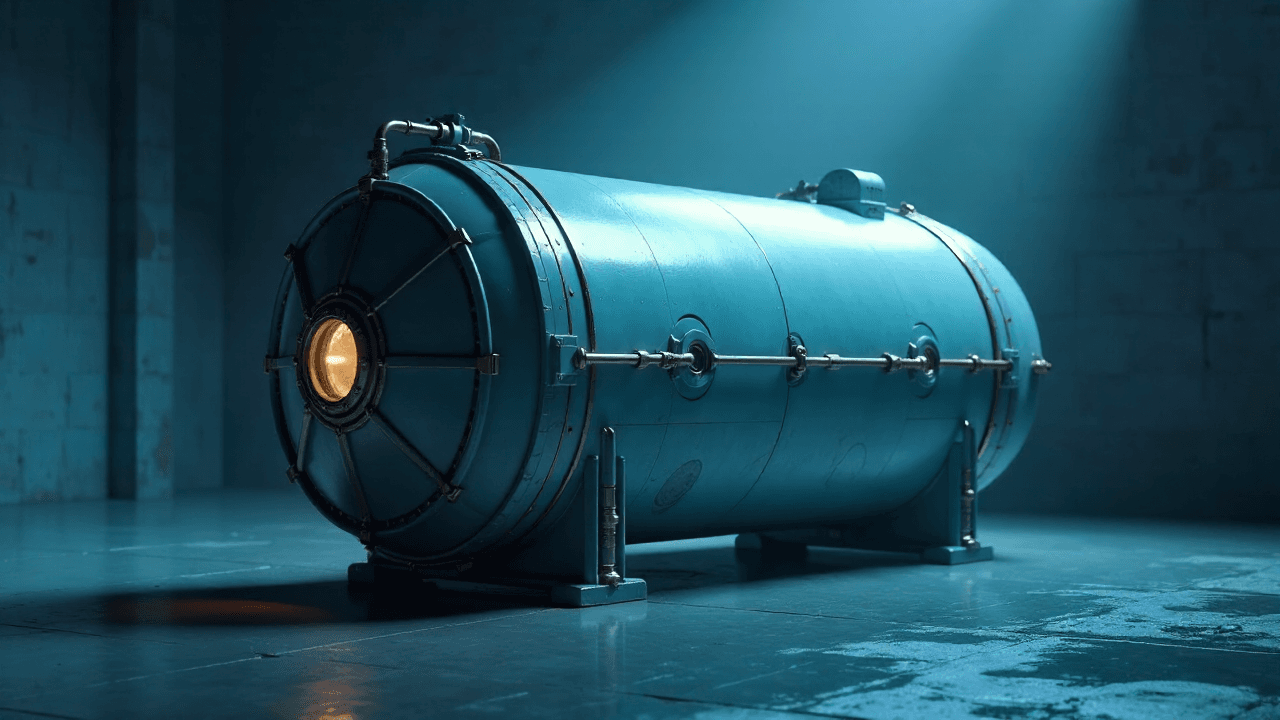
The footage, released directly by Midjourney, tours the physical scanner — a tank-style enclosure designed to submerge a patient in water, which acts as a transmission medium for ultrasound waves and can improve image resolution compared to traditional gel-contact probes. The hardware looks polished and purpose-built. What it doesn't show is a working scan: no imaging output, no comparison against a clinical-grade MRI or CT, no patient data, no radiologist sign-off.
According to The Verge, the video raises more questions than it answers. The core claim — that the device can produce detailed, diagnostically useful images cheaply enough to sit in a spa — remains unsubstantiated by any public evidence.
For anyone tracking AI companies that expand into physical products, the pattern here is familiar: impressive industrial design, bold claims, and a conspicuous absence of the evidence that would actually matter — peer-reviewed imaging studies, FDA clearance filings, or even a side-by-side comparison with an existing diagnostic standard.
Ultrasound physics are well understood. Water-immersion ultrasound is a real technique used in specialized clinical settings, particularly for breast imaging. But scaling it into a consumer-facing spa device that claims to transform medicine is an enormous engineering, regulatory, and clinical validation challenge. None of those hurdles appear to have been cleared, or even addressed publicly.
For Midjourney's existing user base — primarily AI image creators — the scanner project is essentially a parallel venture with no overlap in tooling or workflow. The company has not indicated that its imaging AI research feeds back into its generative image models, and there's no public roadmap connecting the two.
Midjourney CEO David Holz has framed the scanner as a long-term mission project, not a near-term product. That framing matters: it signals the company is comfortable making public claims about transformative technology on a timeline that doesn't require near-term proof. That's a posture worth tracking for anyone who relies on Midjourney's roadmap commitments for their own creative work.
The company's core image-generation platform continues to evolve — Midjourney V7 and its web-based editor have been the more concrete recent deliverables — but the scanner project consumes executive attention and narrative oxygen. When a company's public story drifts toward unverified hardware ambitions, it can be an early signal of strategic diffusion.
The 20-minute runtime of the video is itself telling. It's long enough to suggest transparency, but the absence of any imaging output in that runtime is the detail that sticks. A genuine proof-of-concept demonstration would lead with the scan, not the tank.