Sources
Try it free
Make it yours
Inspired by this story? Turn the idea into your own AI art in seconds — free to start, no card required.
Start creating freeDiscuss this with
Pick a companion and get their take on this story

Elias unpacks the research behind the headlines in plain language.
Inspired by this story? Turn the idea into your own AI art in seconds — free to start, no card required.
Start creating freePick a companion and get their take on this story



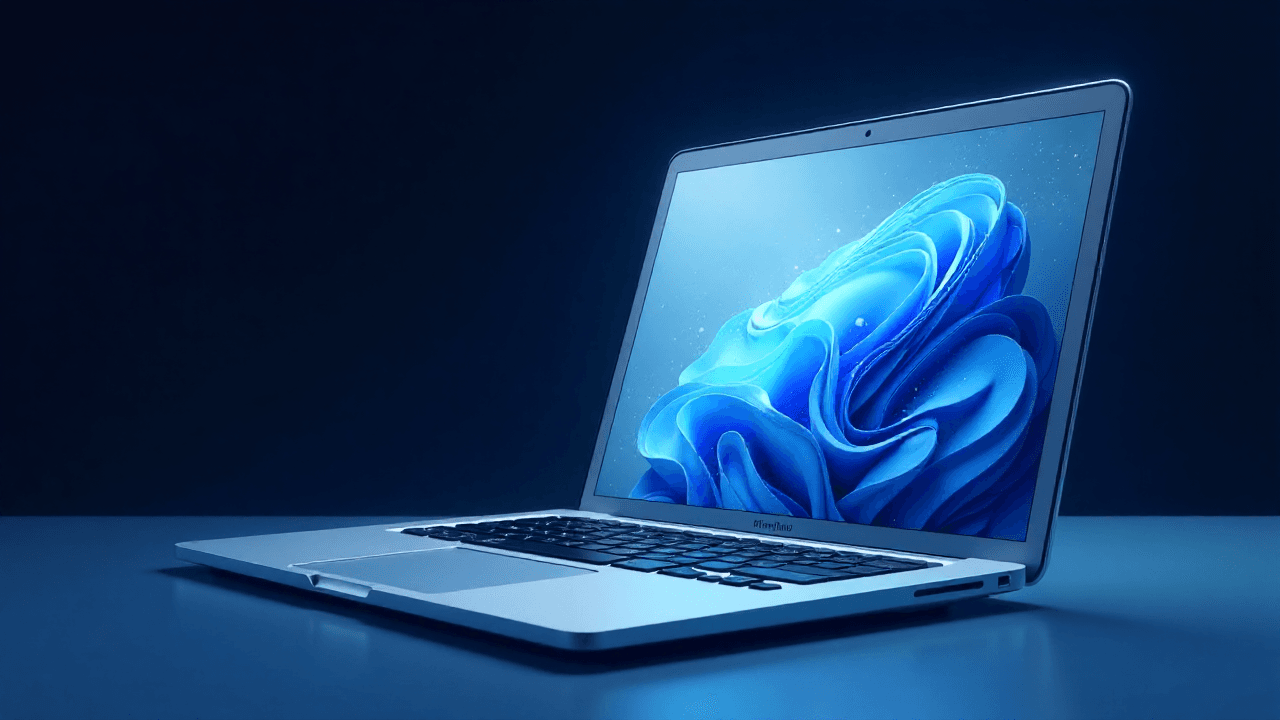
Google's $899 Googlebook puts Gemini — its large language model — directly into the operating system layer, tying it to the cursor, dictation, and desktop widgets rather than keeping it as a separate app or browser tab.

Google's $899 Googlebook integrates Gemini into the cursor, dictation, and desktop widgets.
Image: TechCrunch / TechCrunch AI
The phrase "AI-native" gets used loosely, so it's worth being precise here. On the Googlebook, Gemini isn't a tab you open or a shortcut you invoke manually — it's wired into the input layer itself. Move the cursor over text, and Gemini can act on it. Dictate a note, and Gemini processes the transcription contextually. Desktop widgets surface Gemini responses inline. The effect is that the model is present at the moment of intent rather than one step removed from it.
That distinction matters for creators who spend time in iterative, text-heavy workflows — writing and refining prompts, describing reference images, drafting character briefs for AI companions, or annotating generated outputs. Having Gemini available at cursor level rather than in a separate window removes a small but real friction cost that compounds across a long session.

Gemini surfaces contextually in desktop widgets and the dictation layer, not just as a standalone app.
Image: TechCrunch / TechCrunch AI
At $899, the Googlebook sits in the mid-range laptop tier — above a Chromebook, below a MacBook Pro. According to TechCrunch, Google's pitch is explicitly that the Gemini integration is the differentiating value, not the raw hardware specs. That's a meaningful claim to test: buyers are being asked to pay a premium not for a faster GPU or a better display, but for a tighter feedback loop between the OS and an AI model.
For AI-art creators, the hardware question is separate from the software one. Generating images locally still depends on dedicated GPU resources that a mid-range laptop typically can't provide — so the Googlebook's Gemini integration is most useful as a prompt-drafting and workflow-management layer, with actual generation happening in the cloud through tools like Charmloop's image generator. The device doesn't change what models you can run; it changes how fluidly you can interact with cloud-based AI while you work.

At $899, the Googlebook's premium is framed around Gemini integration rather than raw hardware specs.
Image: TechCrunch / TechCrunch AI
The Googlebook isn't an isolated product decision. Google has been systematically moving Gemini closer to the OS layer across Android, Chrome, and now dedicated hardware. The pattern is consistent with what other platform owners are doing — Apple's Apple Intelligence, Microsoft's Copilot+ PC initiative — but Google's approach leans harder on the assistant being ambient rather than invoked.
For creators who already use Gemini for tasks like expanding a prompt concept or generating alt-text descriptions for reference images, the Googlebook's cursor-level access would make those interactions faster. Whether that speed improvement justifies $899 over a device you already own depends entirely on how central those micro-interactions are to your daily output.
Google has been building out its AI tooling across creative verticals — the company recently developed custom AI workflow tools for fashion designers preparing for New York Fashion Week, as covered in Google's Flow AI fashion tools story. The Googlebook fits that same direction: AI as infrastructure woven into the working environment, not a feature you switch on.
The real test will be whether the integration holds up under the kind of rapid, context-switching sessions that creative work actually involves — and whether Gemini's OS-level presence translates into measurably faster output, or just a more elegant interface for the same underlying latency. Early hands-on reports should clarify that within weeks of the device reaching reviewers.