Sources
Catalog
See it in action
Browse the models and styles behind stories like this one — free account, instant gallery.
Explore the catalogDiscuss this with
Pick a companion and get their take on this story
Browse the models and styles behind stories like this one — free account, instant gallery.
Explore the catalogPick a companion and get their take on this story



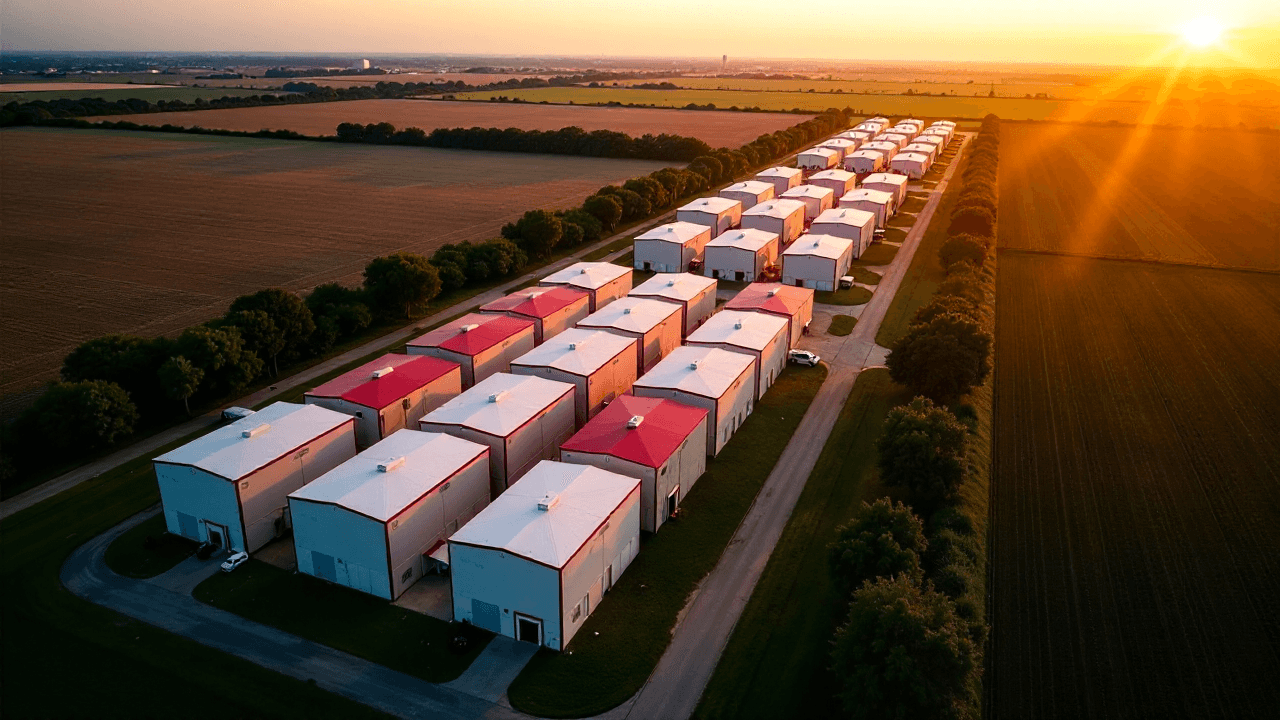
Google is investing $1.5 billion in its Jackson County, Alabama data center campus through 2026 and 2027, adding significant compute capacity to its North American AI infrastructure — and for creators who depend on cloud-based image generation, that scale matters.
The Jackson County campus has been operational since 2019, built on a repurposed former industrial site. This $1.5 billion commitment isn't a new location — it's a substantial deepening of an existing footprint. According to the Google AI Blog, the investment includes both infrastructure expansion and community support programs in Alabama.
Data center expansions at this scale typically mean more GPU and TPU clusters, improved power and cooling systems, and higher aggregate throughput for cloud services. For Google specifically, that infrastructure feeds everything from Search to Workspace AI to the Gemini model family.
AI-art creators live and die by inference speed and availability. When a model is overloaded, generation queues back up, quality can degrade under throttling, and pricing pressure increases as providers pass on scarcity costs. More physical compute — actual servers in actual buildings — is the only real fix.
Google has been aggressively expanding its AI product surface for creators. Gemini 3.5, unveiled at Google I/O 2026, brought frontier-level intelligence and action capabilities to creative workflows. Workspace tools are increasingly AI-native. Each of those services competes for the same underlying compute. A $1.5 billion expansion in Alabama adds headroom across all of them.
Data centers in the southeastern United States serve a large portion of North American traffic with favorable latency profiles. More capacity in this region means Google can handle peak demand — the hours when millions of creators are simultaneously generating images, running Gemini prompts, or processing video — without routing requests to more distant facilities.
Historically, when major cloud providers expand capacity significantly, the downstream effect is either faster response times, lower prices, or both. It rarely happens immediately — infrastructure takes time to come online — but the 2026–2027 timeline means creators could see real-world improvements within the next 12 to 18 months.
Google isn't alone. Microsoft, Amazon, and Meta have all announced multi-billion-dollar data center programs in the past 18 months. The competition is partly about AI model training — getting the next frontier model trained faster — and partly about inference capacity, which is what creators actually interact with every day.
For AI-art creators, the practical implication is that the infrastructure war benefits end users. Providers competing on capacity tend to compete on price and performance. If you're choosing between platforms for your image generation workflow, the underlying compute investments being made right now will shape which tools are fastest and most affordable by late 2027.
The Alabama investment doesn't come with a specific product announcement tied to it — Google hasn't said "this campus powers Imagen" or "this is where Gemini video runs." Infrastructure announcements rarely work that way. But the scale of the commitment — $1.5 billion, multi-year, expanding an already-operational campus — signals that Google is betting heavily on sustained AI demand rather than a short-term spike.
Creators evaluating which AI tools and models to build their workflows around should treat infrastructure investment as a long-term signal. A provider with serious physical capacity commitments is less likely to throttle, deprecate, or reprice aggressively when demand spikes. That's a real consideration when you're deciding where to invest your own time and creative energy.