Sources
Try it free
Make it yours
Inspired by this story? Turn the idea into your own AI art in seconds — free to start, no card required.
Start creating free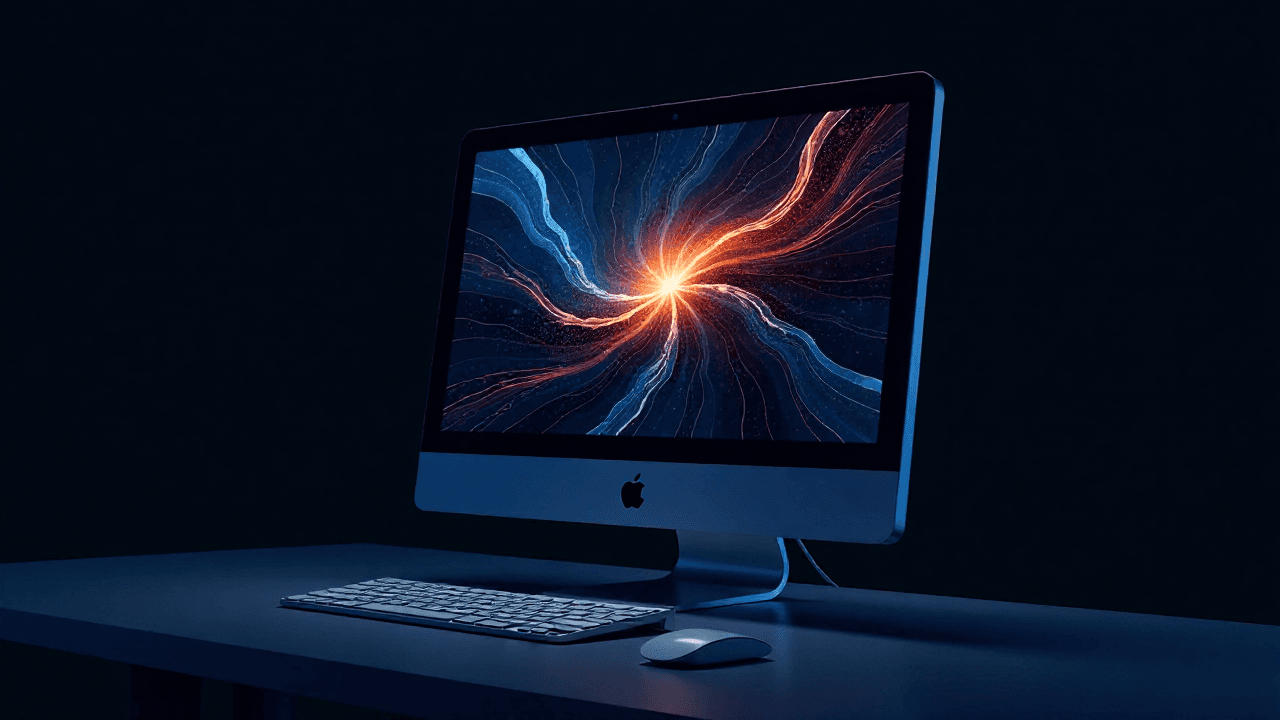

Maya benchmarks every model release so you don't have to — numbers first, hype never.
Inspired by this story? Turn the idea into your own AI art in seconds — free to start, no card required.
Start creating freePick a companion and get their take on this story

Apple's latest Mac Studio and Mac Mini refresh specifically targets local AI development, with enhanced performance designed for inference workloads that creators have been running by daisy-chaining multiple Macs together.
• Apple designed the new Mac Studio and Mac Mini with local AI inference as a primary use case, acknowledging the trend of connecting multiple Macs for AI workloads • The refresh addresses performance bottlenecks that AI creators face when running image generation and other AI models locally on Mac hardware • Local AI development on Mac hardware offers creators more control over their workflows compared to cloud-based solutions • The enhanced specifications suggest Apple is positioning these machines as serious alternatives to GPU-heavy PC builds for AI work
The refreshed Mac Studio and Mac Mini come with specifications tailored for the computational demands of local AI inference. Apple has optimized these machines for the kind of workloads that AI creators typically run when generating images, training custom models, or running inference on existing models.
Creators who generate AI art locally often chain multiple Macs together to distribute processing loads across different machines. This approach lets them run larger models that would otherwise exceed a single machine's memory limits, or process multiple generations simultaneously across their hardware setup.
Running AI models locally on Mac hardware gives creators several practical benefits over cloud-based generation platforms. Local inference eliminates per-generation costs, provides complete privacy for sensitive projects, and removes dependence on internet connectivity. Creators can also experiment with custom models and fine-tuned variants that aren't available through commercial platforms.
The enhanced Mac Studio and Mac Mini specifications suggest Apple recognizes this growing use case among professional creators who need reliable, high-performance hardware for AI workloads.
The refresh specifically addresses the technical requirements of multi-Mac AI setups that creators have been assembling. According to Ars Technica, Apple designed these computers with the understanding that users have been connecting multiple Macs for AI development work.
This approach allows creators to scale their local AI capabilities incrementally by adding more machines to their setup, rather than investing in a single high-end workstation. The Mac Mini's compact form factor makes it particularly suitable for creators who want to build distributed AI processing clusters in limited space.
For creators working with AI image generation, the enhanced local processing power opens up new workflow possibilities. Running models like Stable Diffusion locally means faster iteration cycles, the ability to use custom-trained LoRAs and checkpoints, and complete control over generation parameters that cloud platforms might restrict.
Local setups also enable creators to experiment with newer or experimental models that haven't been integrated into commercial platforms yet. This gives early adopters access to cutting-edge capabilities before they become widely available through hosted services.
The Mac Studio and Mac Mini refresh signals Apple's recognition that AI development has moved beyond research labs and into the hands of creative professionals who need reliable, powerful hardware for their daily workflows.