Sources
Try it free
Make it yours
Inspired by this story? Turn the idea into your own AI art in seconds — free to start, no card required.
Start creating freeDiscuss this with
Pick a companion and get their take on this story
Inspired by this story? Turn the idea into your own AI art in seconds — free to start, no card required.
Start creating freePick a companion and get their take on this story



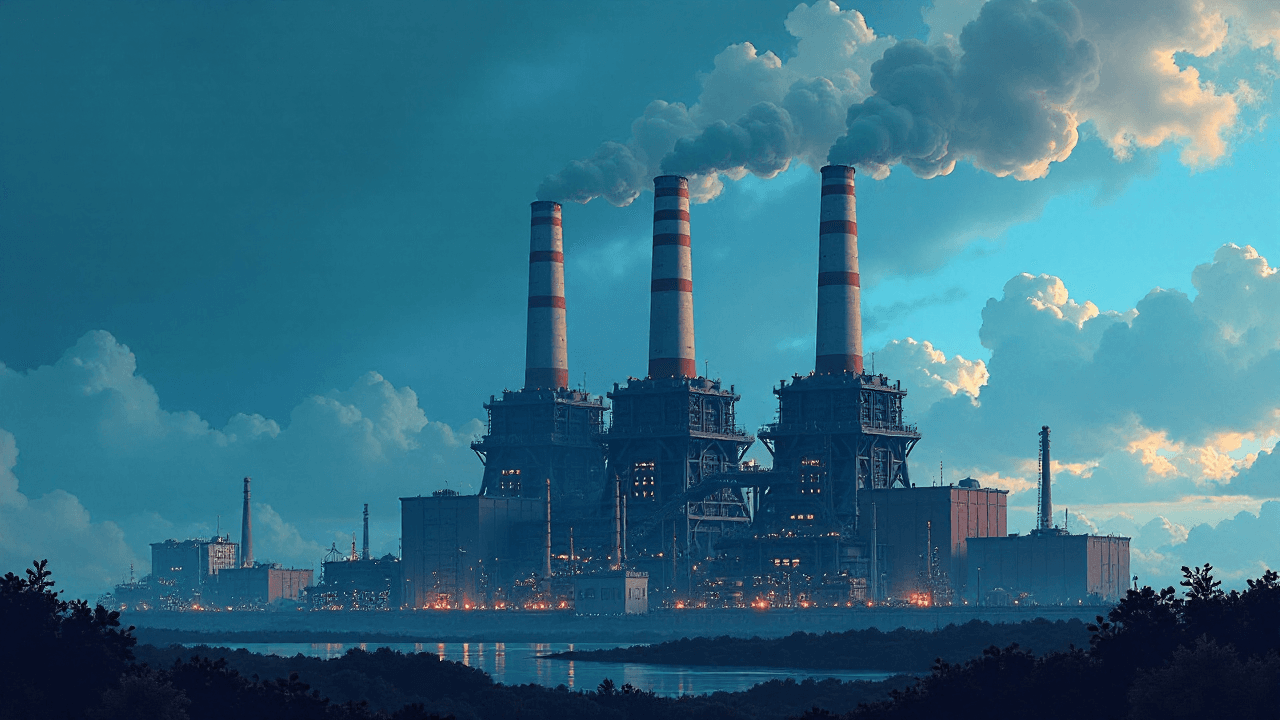
Amazon is investing in a new gas-burning power plant in West Texas that could become one of the largest single producers of greenhouse gases in the United States to power its latest data center facility.
• Amazon has invested significantly in a new gas-burning power plant in Pecos County, Texas, to supply its West Texas data center with electricity • The facility could rank among the largest single sources of greenhouse gas emissions in the US, according to reporting by the New York Times • The arrangement highlights the massive energy demands of AI infrastructure as companies race to build processing capacity for image generation and other AI workloads • Data centers powering AI image generators like those available through Charmloop's catalog require enormous amounts of electricity for GPU clusters that handle inference requests • The environmental cost of AI generation is becoming a critical factor as the technology scales from experimental tools to production services handling millions of daily requests

Amazon's data center infrastructure requires massive power generation to support AI workloads.
Image: The Verge / The Verge AI
The Pecos County power plant represents Amazon's strategy to secure dedicated energy sources for its expanding AI infrastructure. According to The Verge, the gas-burning facility has received substantial investment from Amazon specifically to power the company's new West Texas data center operations.
This arrangement reflects the energy reality facing AI companies as they scale their services. Modern AI image generation requires clusters of high-performance GPUs that consume dramatically more power than traditional web servers. A single inference request to generate an image through services like those offered in Charmloop's generator involves complex neural network computations that can require hundreds of times more energy than serving a static web page.
The environmental implications extend directly to AI art creators and their workflow choices. Each image generation request — whether for concept art, character design, or creative exploration — contributes to the aggregate energy demand that drives facilities like Amazon's Texas operation.
The scale becomes significant when considering that popular AI image platforms process millions of generation requests daily. A creator generating dozens of iterations to refine a character design or explore style variations is participating in an energy-intensive process that, multiplied across thousands of users, drives the demand for massive power infrastructure.
For creators concerned about environmental impact, this highlights the importance of efficient prompting techniques and thoughtful iteration strategies. Learning to craft more precise prompts through resources like Charmloop's guides can reduce the number of generation attempts needed to achieve desired results, effectively reducing the per-project energy footprint.
Amazon's Texas facility reflects broader infrastructure pressures across the AI industry. Companies are increasingly securing dedicated power sources rather than relying on existing grid capacity, leading to arrangements like the Pecos County plant that prioritize immediate availability over environmental considerations.
This trend affects the entire AI art ecosystem. As energy costs and environmental scrutiny increase, AI platforms may need to implement usage caps, pricing adjustments, or efficiency requirements that directly impact creator workflows. The current abundance of relatively affordable AI generation may not be sustainable at current environmental costs.
The Texas plant decision also signals how AI companies are prioritizing rapid scaling over immediate environmental goals. For creators building businesses around AI-generated content, this suggests the current pricing and availability landscape may shift as environmental regulations and energy costs evolve.
The development underscores the hidden infrastructure costs of AI art creation, where each generated image represents a small fraction of the massive energy investment required to maintain the GPU clusters and cooling systems that make real-time AI generation possible.