Sources
Try it free
Make it yours
Inspired by this story? Turn the idea into your own AI art in seconds — free to start, no card required.
Start creating freeDiscuss this with
Pick a companion and get their take on this story
Inspired by this story? Turn the idea into your own AI art in seconds — free to start, no card required.
Start creating freePick a companion and get their take on this story



A single fallen power line in Northern Virginia triggered cascading failures across multiple AI data centers, exposing critical vulnerabilities in how compute infrastructure handles grid disruptions as AI workloads surge nationwide.
• The Northern Virginia incident revealed AI data centers lack proper grid resilience protocols despite handling massive compute workloads for image generation and training • Current data center backup systems are designed for brief outages, not the extended grid instability that AI's power demands create • The failure affected multiple facilities simultaneously, showing how concentrated AI infrastructure creates systemic risk • Industry experts are calling for mandatory grid coordination standards as AI data centers consume increasing portions of regional power capacity • The incident highlights infrastructure constraints that could limit AI model availability and increase costs for creators
The Northern Virginia incident began when a transmission line failure triggered automatic shutdowns across several data centers hosting AI workloads. Unlike traditional server farms that can gracefully reduce capacity, AI training and inference operations require sustained high-power draws that make them particularly vulnerable to grid fluctuations.
AI image generation models like those powering popular creation tools demand consistent power delivery — a brief voltage drop can corrupt training runs worth thousands of dollars or cause inference failures that interrupt creative workflows. The Virginia outage demonstrated how a single point of failure can cascade through interconnected AI infrastructure.

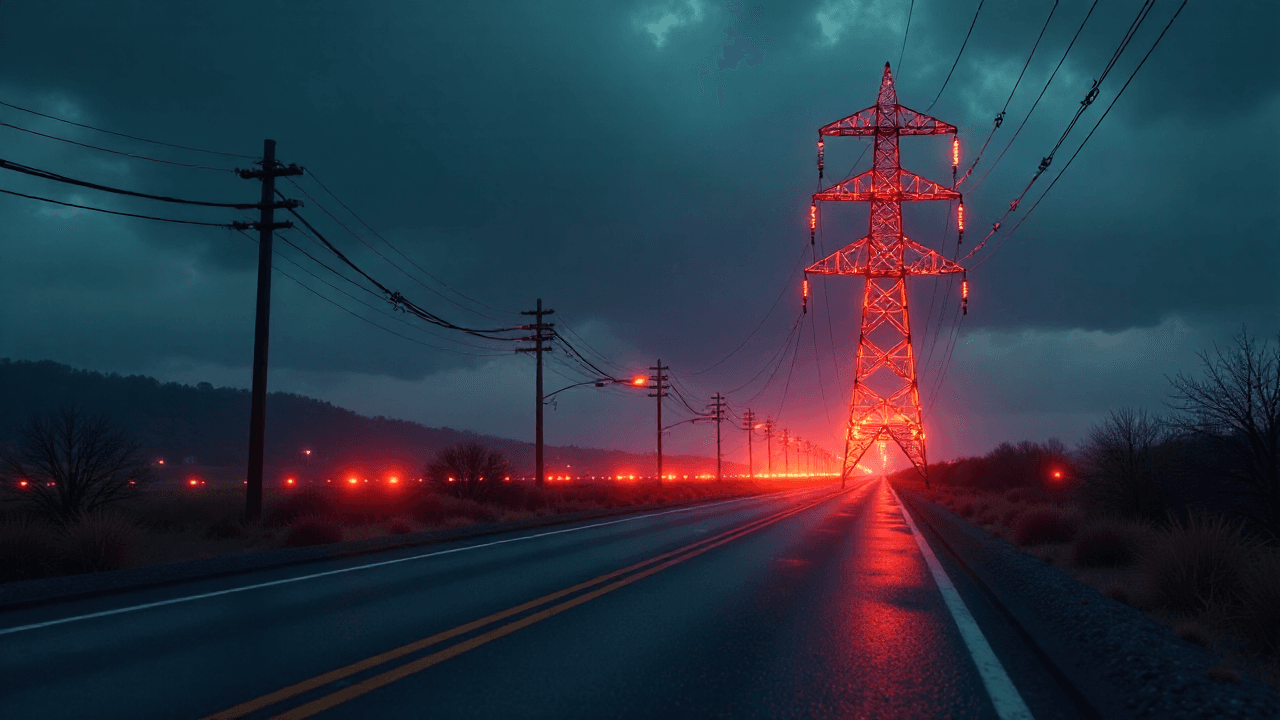
The Northern Virginia incident revealed critical vulnerabilities in AI data center grid resilience.
Image: TechCrunch / TechCrunch AI
Traditional data center backup systems assume brief outages followed by quick restoration. But AI workloads present a different challenge: they consume 10-50 times more power per rack than typical servers and can't easily shed load without losing work.
The Virginia facilities had standard uninterruptible power supplies and diesel generators, but these systems couldn't handle the sustained high-power demands of GPU clusters running diffusion models and large language models. When backup power kicked in, several facilities had to shut down AI workloads entirely to preserve critical systems.
This infrastructure mismatch affects creators directly — when training runs fail or inference capacity drops, it translates to longer wait times, higher costs, and reduced availability of AI generation models.
Northern Virginia hosts roughly 70% of global internet traffic and a significant portion of AI compute infrastructure. The concentration that makes the region efficient for data routing also creates systemic vulnerability — a single grid event can impact multiple providers simultaneously.
According to TechCrunch, the incident affected facilities from multiple major cloud providers, demonstrating how regional infrastructure failures can ripple through the entire AI ecosystem.
The Virginia incident has accelerated calls for mandatory coordination between AI data centers and regional grid operators. Unlike traditional data centers that can reduce load during peak demand, AI training operations often run continuously for weeks or months.
Industry groups are proposing requirements for AI facilities to participate in demand response programs and maintain sufficient backup power for extended outages. Some suggest AI data centers should be classified differently from traditional hosting facilities given their unique power profiles and economic impact.
For creators using AI generation tools, infrastructure vulnerabilities translate to real workflow impacts. Training custom models becomes riskier when power failures can destroy days of progress. Inference costs may rise as providers invest in more robust backup systems and grid coordination.
The incident also highlights the importance of geographic diversity in AI infrastructure. Creators relying on single-region providers face concentrated risk, while those using distributed generation services may see better reliability.
As AI compute demands continue growing, infrastructure resilience will increasingly determine which models remain available and affordable. The Northern Virginia incident serves as a wake-up call for an industry that has prioritized performance over grid stability — a balance that may need recalibrating as AI becomes more central to creative workflows.