Sources
Weekly digest
Stay ahead of AI art
Get the week's top AI and AI-art stories delivered to your inbox — curated, concise, free.
Free. Unsubscribe any time.
Discuss this with
Pick a companion and get their take on this story
Get the week's top AI and AI-art stories delivered to your inbox — curated, concise, free.
Free. Unsubscribe any time.
Pick a companion and get their take on this story



AI is the primary driver pushing robots from narrow, scripted tasks toward general-purpose autonomy — but leading researchers say the gap between a factory arm and a robot that can reliably load a dishwasher is still measured in hard, unsolved problems.
Industrial robots have been autonomous in a narrow sense for decades — repeat the same weld, the same pick, the same placement, thousands of times without error. What AI is now enabling is something different: robots that can generalize. A model trained on diverse manipulation data can, in principle, handle an object it has never physically encountered before by reasoning about its shape, weight, and likely behavior.
That shift from memorized motion to reasoned action is the core of what researchers mean by general-purpose autonomy. According to Ars Technica's reporting, several founders and academics working in robotics describe the current moment as the point where language and vision models — the same architectures behind image generators and chatbots — are being repurposed as robot brains. The practical result is faster task generalization: instead of hand-coding a new motion sequence for every new object, you fine-tune a foundation model on a relatively small set of robot demonstrations.
Hugging Face's LeRobot framework, which added human feedback loops in its v0.6.0 release, is one open-source example of this pipeline in practice — human corrections fed back into training to tighten a robot's behavior on edge cases.
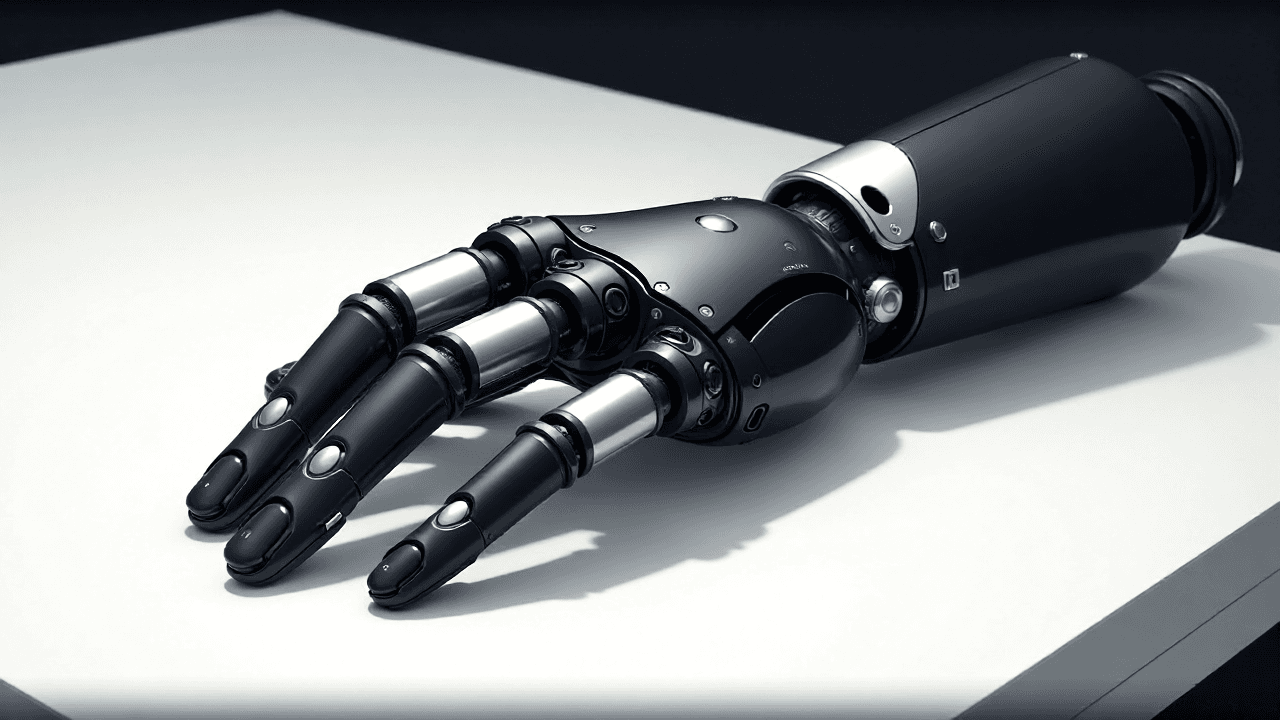
Vision and language are largely solved at a level good enough for many robot tasks. Hands are not. The human hand has 27 degrees of freedom and a tactile feedback system that no current robot gripper matches. Picking a ripe tomato without bruising it, threading a cable through a clip, folding a shirt — these tasks require force sensing and fine motor control that current hardware and AI models handle poorly under real-world variation.
Researchers are attacking this from two sides: better hardware (soft grippers, tactile sensors) and better training data (teleoperation datasets, simulation-to-real transfer). Neither is solved. The failure rate on novel dexterous tasks in uncontrolled environments is still high enough that unsupervised deployment — a robot left alone to complete a task without a human ready to intervene — is not commercially viable outside tightly bounded settings.
The consensus among the researchers Ars Technica spoke with is that workplace deployment will mature first. Warehouses, hospitals, and manufacturing floors share a key property: they can be partially engineered to reduce the unpredictability that breaks robot behavior. Lighting is consistent. Objects are labeled. Floors are clear. That is a much friendlier environment for a system that still struggles when a cereal box is turned sideways or a doormat shifts underfoot.
Home deployment is a longer timeline precisely because homes resist standardization. Every kitchen is different. Every family leaves objects in unpredictable places. The robot that can handle your kitchen needs either vastly more robust generalization than current models provide, or a home engineered around the robot's limitations — which is not how most people want to live.
For anyone building AI systems or tracking where foundation model investment is flowing, robotics is increasingly the answer. The same multimodal architectures that generate images and hold conversations are being adapted — with varying success — to physical control. The companies that can close the sim-to-real gap and solve dexterous manipulation at scale will define what general-purpose autonomy actually looks like in practice. Researchers put that horizon at years, not decades — but they are careful not to name a year.